My family “forgot” to book me a plane ticket to Italy for my sister’s wedding. I booked my own hotel and left, and when I finally returned to the United States and sat across from them in a Hyde Park restaurant, they had no idea I was now the one holding the keys to everything they thought they controlled.

The freezing rain hammered against the windows of the Chicago office building, each drop exploding like a tiny grenade against the glass. It was mid-January, a Thursday that felt more like a sentence than a day. I hunched over my keyboard, fingers flying across an Excel spreadsheet as I tried to untangle a supply chain crisis that threatened to derail shipments to three continents. The fluorescent lights above buzzed with their usual headache-inducing frequency, and somewhere down the hall, a printer jammed for the third time that afternoon.
My phone lit up.
Mom.
My face softened immediately, and I grabbed the phone with one hand while saving my work with the other. I’d just wired $4,000 that morning—every penny of my carefully hoarded bonus—to book the family’s flights to Italy for Nicole’s wedding at Lake Como.
The smile that spread across my face was genuine, warm—the smile of someone who still believed that taking care of family meant something.
“Hi, Mom. Did you get the—”
“Abigail, honey. There’s been a small change to the sleeping arrangements at the villa.”
Juniper Rhodes’ voice had that particular chirpy tone she used when delivering bad news, the same tone she’d used when I was twelve and she had “accidentally” donated my entire rock collection to Goodwill.
“The groom’s business partner—he’s very important, dear, invested in Marcus’ start-up—well, we gave him your room.”
Outside, the gray sky seemed to press closer to the window.
“I—where am I supposed to sleep?”
“Oh, you’re so resourceful, sweetheart. There’s a perfectly nice youth hostel about five miles from the villa. I looked it up online, and it has excellent reviews. Well, mostly excellent. Three and a half stars.”
The blood drained from my face. A youth hostel. While my older sister Nicole and her fiancé, Marcus, stayed in the master suite. While my younger sister Emily occupied the room with the lake view. While my parents took the guest cottage.
“Mom, I just sent you four thousand dollars for the tickets this morning.”
“Did you?”
There was a pause. A very long pause. I could hear her breathing on the other end, could practically see her fidgeting with her pearl necklace, the one I had helped her find when she’d misplaced it last Christmas.
“Well, about that, honey. Emily really needed good photos for her Instagram. You know how important her influencer career is. The lighting in economy is just terrible, all those overhead bins and cramped seats. So I used that money to upgrade her to first class. It was only four thousand dollars, and it made such a difference. She’s going to tag the airline and everything.”
My hand tightened around the phone. The office suddenly felt too small, too hot, despite the winter cold seeping through the old windows.
“And my ticket? My ticket.”
“Oh, you always figure things out, Abigail. You’re so good at finding deals. There’s an economy flight with three different layovers—one in Newark, one in Reykjavik, and one in Frankfurt—that gets you there just in time for the reception, so you can choose one. It’s only seventeen hours of travel time. You might miss the ceremony, but honestly, you’ve seen Nicole in a wedding dress at all her bridal showers. And you don’t mind flying economy, do you? You’re not fussy like Emily.”
The words landed like physical blows.
“You always figure things out.”
My vision tunneled. In my mind, a slideshow began to play—ten years of memories flickering past like a demented PowerPoint presentation. Filing their taxes every April because Dad couldn’t figure out TurboTax. Resetting the Netflix password monthly because Mom kept forgetting it. Driving across town at midnight to pay Dad’s parking tickets before they went to collections. Explaining to Emily how to dispute a credit card charge. Teaching Nicole how to use Mail Merge for her wedding invitations. Fixing the Wi-Fi router. Programming the thermostat. Updating their phones. Remembering everyone’s birthdays. Sending the Christmas cards. Booking the restaurants. Making the reservations.
You always figure things out.
Not thank you. Not we appreciate you. Not what would we do without you?
You always figure things out.
Because I was a utility. A free service. A tool to be used and put away when no longer needed.
My phone buzzed against my ear. An email notification. I pulled the phone away from my face and looked at the screen.
Confirmation. First Class Upgrade. Emily Rhodes. ORD to MXP. $4,127.50.
There it was. The confirmation email, sent to the family email account that I managed because no one else could remember to check it. My $4,000. My bonus that I’d earned by working sixteen-hour days during the port strike. The money I’d saved by bringing packed lunches and skipping coffee shops and walking instead of taking Ubers—converted into champagne and lie-flat seats and warm towels for my twenty-four-year-old sister, who had never worked a full-time job in her life.
Something inside my chest didn’t break. It didn’t shatter. It didn’t crack.
It froze.
Like water turning to ice, every warm feeling I’d ever had toward my family crystallized into something hard and cold and permanent. The temperature in my chest dropped to zero, and I felt a clarity I’d never experienced before.
“Honey? Are you still there? Abigail?”
I didn’t scream. I didn’t cry. I didn’t argue. My voice, when it came, was calm. Terrifyingly calm.
“I’m here.”
“Oh, good. So you’ll look into those economy flights? And maybe bring some snacks for the layovers? Airport food is so expensive, and you’re always so good at—”
“I have to go, Mom. There’s something I need to take care of.”
“Of course, dear. Don’t work too hard. We’ll see you in Italy. Oh, and could you bring that nice scarf Nicole wanted to borrow? The blue one? She forgot to ask you, and—”
I hung up.
For a moment, I sat perfectly still, staring at the rain-soaked window. Then I reached down and opened the small safe hidden beneath my desk, behind the box of printer paper no one ever touched. My fingers found the worn passbook immediately.
Aunt Violet’s savings account. One hundred and twenty thousand dollars.
Aunt Violet, my father’s eccentric older sister, had died three years ago. At the funeral, she’d pulled me aside—this was two hours before she’d collapsed, while everyone else was in the church—and pressed the passbook into my hands.
“This is for when you can’t stand them anymore,” Aunt Violet had whispered, her papery hand gripping mine with surprising strength. “Not if. When. Because they’ll drain you dry, sweet girl. They’ll take and take until there’s nothing left. This is your escape hatch. Use it.”
I had laughed it off then, had tucked the passbook away and thought Aunt Violet was being dramatic.
I wasn’t laughing now.
I opened my desk drawer and pulled out a piece of paper. My hand was steady as I wrote one sentence.
Mom, you’re right. I do always figure things out. And I’m going to figure out my own life starting right now.
I picked up my phone and called my mother back. She answered on the first ring.
“Did you find a flight already? I told you that you were—”
“Mom?” I interrupted, my voice like steel wrapped in ice. “You’re right. I do always figure things out. And I’m going to figure out my own life starting right now.”
“What? Honey, what are you—”
I hung up. Then I powered off my phone completely.
Outside, the freezing rain continued to fall, but I no longer felt cold.
I felt nothing at all.
And somehow, that felt exactly right.
Friday morning arrived with the kind of bitter cold that made Chicago feel like it existed on another planet entirely. I walked into the office building wearing the same clothes I’d worn yesterday, having spent the night on my couch, staring at the ceiling, making lists. My resignation letter was printed and sitting in a manila envelope tucked under my arm.
Hunter Vance’s office was on the corner of the fourteenth floor, all glass walls and expensive furniture that he’d expensed to the company. I could see him through the window, leaning back in his leather chair, feet on the desk, talking loudly on his phone, probably taking credit for someone else’s work.
Again, I didn’t knock. I just walked in and placed the envelope on his desk.
Hunter looked up, irritated at the interruption. He held up one finger—wait—and continued his conversation.
“Yeah, yeah, we crushed that logistics problem. I stayed up all night working on it. My team is solid. But you know how it is. I have to do the heavy lifting myself.”
I had worked until two in the morning on that problem. Hunter had been at a sports bar.
He finally ended the call and picked up the envelope, pulling out the single sheet of paper. His eyes scanned it, and then he looked up at me with a smirk that made my skin crawl.
“Immediate resignation? What, you get a better offer?”
“Something like that.”
Hunter leaned back in his chair, that smirk widening into something predatory.
“I don’t think so, Rhodes. You signed a non-compete agreement. Twelve months. You work for any logistics company in North America or Europe, and I will sue you into the ground. I’ll make sure you never work in this industry again.”
It was a threat he’d used before to keep talented people trapped in his department, watching them slowly burn out while he stole their ideas and passed them off as his own.
I picked up my box of personal items—the coffee mug Aunt Violet had given me, the small succulent that had somehow survived three years of office fluorescent lighting, the photograph of my college graduation. I looked at Hunter and smiled.
“Don’t worry, Hunter. I’m going to a place you don’t even know exists on a map.”
His smirk faltered.
“What’s that supposed to mean?”
“It means your non-compete specifies North America and Europe, but the world is bigger than your limited geography knowledge suggests. Have a nice life.”
I walked out of his office, leaving the door open behind me. I could hear him yelling something about professional courtesy, but I was already in the elevator, the doors closing on that chapter of my life.
The next forty-eight hours were a blur of calculated destruction. By Friday noon, I’d sold my car to CarMax for $18,000 in cash. It was a low offer, but I took it without blinking.
The weekend was spent in a frenzy of liquidation. I listed my furniture on Facebook Marketplace at prices so low they triggered a bidding war. Strangers came and went, hauling away my couch, my kitchen table, and my bed frame. By Sunday evening, my apartment echoed with emptiness.
On Monday morning, I walked into my apartment leasing office and handed over $3,000 to break my lease immediately. The manager had looked at me like I was insane, citing the sixty-day notice clause, but cash on the table had a way of bypassing bureaucracy.
By noon on Monday, I was sitting in a bank branch that stayed open late, transferring every penny of my savings, the $18,000 from the car, the three years of careful saving, and Aunt Violet’s $120,000 into an HSBC expat account that my parents knew nothing about, an account that couldn’t be traced through the family’s usual financial ecosystem.
At 9 p.m., sitting in a coffee shop, I opened my laptop for the last time before selling it. I logged into my email and set up a scheduled message—one email, to be sent on the first of every month to my parents’ email address. The message was simple:
I am still alive, safe, and healthy. Do not waste time filing a police report. I will not reply to anyone.
It was perfect. Proof of life without giving them any way to find me. They couldn’t claim I was missing. They couldn’t track me. I would be a ghost, present enough to exist, but impossible to reach.
I scheduled the emails to send automatically for the next five years, then closed the laptop.
At 10 p.m., I walked into a Verizon store and bought a cheap prepaid phone with cash. I spent twenty minutes transferring only the essential contacts—none of them family—then removed the SIM card from my old phone. I snapped it in half and dropped it in a trash can outside the store.
At midnight, I was at O’Hare Airport, standing in line for a one-way ticket to Lima, Peru, South America. Not North America. Not Europe. Hunter’s non-compete didn’t touch it.
And Peru had something else: alpaca wool, leather goods, and textile suppliers that no one in Chicago had direct connections to. I’d been researching for months, looking for an edge, a way to build something of my own someday.
That someday had just arrived early.
The plane lifted off at three in the morning. I watched the lights of Chicago shrink below me, then disappear into the darkness. Somewhere in that city, my phone was lying in a landfill, and my family was starting to panic.
While I was gone, I could not see what was happening in Chicago. But based on the records, the angry voicemails I ignored, and what Nicole later confessed to me in tears, I can reconstruct exactly how the Rhodes family crumbled without me.
Three days after I left, back in Evanston, my father, George, sat at his computer, trying to log into his investment account to check on their portfolio, something I usually did for him every quarter. But the system kept asking for two-factor authentication. He clicked the button that said Send Code, and a message popped up.
Code sent to phone ending in 88.
He frowned. That wasn’t his phone number. He tried again. Same message. He called Mom into his study.
“Do you know whose number ends in 88?”
Mom peered at the screen.
“That’s Abigail’s number. Why is your investment account sending codes to Abigail?”
“Because she set it up,” Dad said slowly, the realization dawning. “She set up all of our accounts. The security questions, the backup numbers, everything.”
They looked at each other as the same thought occurred to both of them simultaneously. Mom grabbed her phone and called me. It went straight to a message.
The number you have dialed is not in service.
She tried again. Same message.
“George,” Mom said, her voice tight. “Call her office.”
Dad called. The receptionist at my old company cheerfully informed him that “Abigail Rhodes no longer worked there as of last week.”
“What do you mean, no longer works there? She didn’t tell us she was quitting.”
“I’m sorry, sir. But that’s all the information I can provide. Have a great day.”
The line went dead.
Then Mom’s phone buzzed. My first email.
I am still alive, safe, and healthy. Do not waste time filing a police report. I will not reply to anyone.
Dad read it over her shoulder.
“What the hell does that mean?”
But Mom knew. As she stood in the study, surrounded by the comfortable life that I had helped maintain, she understood with sudden, terrible clarity.
I was gone.
Really, truly gone. And I’d locked them out of everything on my way out the door.
Spring arrived in Lake Como three months later, bringing with it blooming wisteria and soft Italian sunlight. Nicole’s wedding should have been perfect. Instead, as I later learned, it was chaos.
The florist had delivered white roses instead of cream roses, and no one knew which vendor to call to fix it because I had been the one who organized all the contact information. The seating chart was a disaster because the calligrapher had misspelled three names, and I wasn’t there to catch it and order reprints. Half the guests were asking about dietary restrictions that hadn’t been properly communicated to the caterer.
Emily stood in the courtyard, taking selfies in her bridesmaid dress, oblivious to the chaos. She’d posted seventeen Instagram stories from her first-class flight, complete with champagne flutes and the airline-branded sleep mask. The engagement was decent, though several followers had asked why she was flying first class while her sisters were nowhere to be seen.
Nicole stood near the villa’s fountain, her makeup artist trying to fix her running mascara. She was crying not from joy, but from stress.
“Where is she?” Nicole kept asking. “Where’s Abigail? She would have fixed all of this. She always fixes everything.”
Mom patted her oldest daughter’s shoulder helplessly.
“She’s just… running late, dear. The flight must have been delayed.”
But Mom knew better. My monthly email had arrived right on schedule.
I am still alive, safe, and healthy. Do not waste time filing a police report. I will not reply to anyone.
The wedding happened. The ceremony was beautiful in spite of the disasters, and Nicole and Marcus said their vows as the sun set over the lake. But there was an empty chair in the family section, and everyone pretended not to notice.
Back in Chicago, the bills were piling up. Dad sat at the kitchen table, staring at a mountain of envelopes—ComEd, water, property tax, the quarterly estimated tax payment to the IRS that he’d forgotten about because I always set up the automatic payment.
He’d tried to log into their bank account to pay the bills, but he was locked out. Two-factor authentication. Security questions he didn’t know the answers to because I had set them up years ago.
He’d called the bank. They’d asked him to verify his identity by providing the last four digits of his Social Security number, his mother’s maiden name, and the name of his first pet. He’d provided all of that. Then they’d asked for the answer to the security question:
What is your favorite fictional character?
Dad had no idea. He’d tried.
“Superman.” Wrong.
“James Bond.” Wrong.
After two attempts, he was sweating. He didn’t dare try a third time.
Mom had grabbed the phone.
“Let me try.”
She’d guessed.
“Elizabeth Bennet.” Wrong.
Account locked. Please visit a branch location.
They’d eventually had to go to a physical branch with two forms of ID and their marriage certificate to get temporary access, a process that had taken three hours and left Dad humiliated and furious.
But the damage was already done. The IRS estimated tax payment had been due on April 15. It was now June. The IRS’s automated system had already calculated penalties for late payment—$500 per month, compounding interest at six percent annually. And because the payment triggered a review, an IRS agent had noticed that Dad had underpaid his taxes for the previous year as well.
More penalties. More interest.
The total bill: $98,000, due immediately.
Dad’s face had turned the color of old newspaper when he opened that letter.
Emily, meanwhile, had continued her spending spree through Italy. Designer dresses from Milan. Handbags from Florence. Dinners at Michelin-starred restaurants that she charged to the family credit card, always tagging the restaurants and racking up likes.
The credit card statement arrived. $53,000.
Mom had actually gasped when she opened it.
“Emily, what the hell is this?”
Emily, lounging on the couch with her phone, had barely looked up.
“What? Those were work expenses. Content creation. I need good backdrops for my posts.”
“$53,000 of backdrops? We don’t have this kind of liquidity right now, Emily.”
“Mom, you don’t understand influencer economics. I need to look successful to be successful. That’s how it works.”
But the Rhodes cash flow was breaking. Dad had already taken out a loan against his 401(k) to pay the IRS. The credit card debt was pushing them into dangerous territory. Their credit score, which had been a pristine 810 when I was managing things, dropped to 680 in a single quarter. Banks started declining their cards at checkout counters.
It was humiliating.
While my family was melting down in the Chicago spring, five thousand miles away in the Andes Mountains, I was dying.
Or at least, it felt like I was dying.
The fever had started three days ago. I’d been hiking through mountain villages, meeting with local textile suppliers, when the headache hit. By nightfall, I was shivering uncontrollably, despite three blankets. By morning, I couldn’t stand without the world spinning.
The hostel owner, a kind woman named Rosa, had brought me soup and medicine. I tried to sit up, but my body betrayed me. I collapsed back onto the pillow, sweat soaking my hair.
I lay in the narrow bed, my phone clutched in one hand, staring at my mother’s contact information. It would be so easy. One call.
Mom, I’m sick. I need help.
They’d come. Despite everything, they’d come. They’d pay for doctors, for a medical evacuation if necessary. Because that’s what families did, right?
But then I heard it, echoing in my fevered brain.
You always figure things out.
Not we’ll help you. Not we’ll take care of you.
You always figure things out.
Because when they helped, it came with strings. With obligations. With the unspoken expectation that I’d return to being their free utility service. Their unpaid assistant. Their emergency contact for every problem they couldn’t be bothered to solve themselves.
My hand loosened on the phone. It dropped onto the thin mattress beside me.
Rosa entered the room, seeing my distress. She sat on the edge of the bed, lifting my head gently and spooning warm broth into my mouth, murmuring comforting words in Quechua that I couldn’t understand but felt deep in my bones.
A stranger was showing me more care in five minutes than my family had shown in five years.
Three days later, I woke up weak but clear-headed. The fever had broken sometime in the night. I sat up slowly, my body aching but functional. I looked at my phone, still lying on the mattress where I’d dropped it.
Something had died in those three days. Not my body. My body had survived.
What had died was the part of me that needed them. The part that still believed family meant something more than shared DNA and obligatory holiday dinners. The part that thought love could be earned through service and sacrifice.
That part was gone, frozen to death in a drafty hostel room in the Andes Mountains.
What remained was colder, harder, and infinitely more focused.
Over the next twelve months, I became a ghost story in the supply chain world.
I started small, using Aunt Violet’s money to buy samples from local artisans—alpaca wool scarves, leather bags, woven textiles that major retailers in the U.S. would kill for. I spent weeks in villages that didn’t appear on Google Maps, learning which families had the best craftspeople, negotiating prices in broken Spanish that got better with each passing week.
I learned to read the weather by watching the clouds gather over the mountains. I learned which buses to take and which to avoid. I learned how to spot quality just by running my fingers over the weave of a fabric.
And slowly, my reputation grew. The American woman with the cold eyes who pays fair prices and always delivers on time. That’s what they called me in the villages.
Not warm. Not friendly. But reliable. Trustworthy. Someone who kept her word.
By month six, I had exclusive contracts with twelve family workshops. By month nine, I was shipping containers of goods to boutique retailers in New York and California. The money started flowing. Not a trickle. A flood.
By month fourteen, my net worth had tripled. I’d turned Aunt Violet’s $120,000 into nearly $400,000.
And then Beatrice Ford called.
Beatrice Ford was a legend in logistics. She’d built Nexus Logistics from a single warehouse in Newark into a global powerhouse that made Hunter Vance’s company look like a lemonade stand. She was in her late fifties, with iron-gray hair she wore in a sharp bob and a reputation for being utterly ruthless in business but fiercely loyal to her people.
She tracked me down through the supply chain network. Apparently, the American woman with the cold eyes had become enough of a phenomenon that people were talking.
We met at a café in Lima. Beatrice ordered black coffee and got straight to the point.
“I don’t care about your résumé. I don’t care about your degree. I don’t care that you quit your last job with no notice. What I care about is that you’ve done in twelve months what most people couldn’t do in five years. I need someone who can build something from nothing. I need someone who doesn’t quit when things get hard. And from what I hear, you walked through fever and altitude sickness to close deals that would have sent my own people running home crying.”
I sipped my coffee.
“What are you offering?”
“Global Strategy Director. Chicago headquarters. You’ll have a team of twenty, a budget of fifteen million, and complete autonomy to build out our South American supply chains. Salary is 270,000 base, plus performance bonuses that could double that. Full benefits, relocation assistance, and a corner office overlooking Lake Michigan.”
It was triple what Hunter had paid me. It was the kind of position that usually required fifteen years of experience and an MBA from Harvard.
“When would I start?”
Beatrice smiled. It was the smile of a shark who’d just spotted prey.
“I want you back in Chicago by the first of May. We’ll handle everything. You just show up and start making me money.”
I calculated. It would be nearly sixteen months since I left.
“I’ll take it.”
We shook hands. The deal was done.
On the first of May, I landed at O’Hare Airport. I’d left amidst freezing rain with two suitcases and a broken heart. I returned in the sunlight with four suitcases, $400,000 in assets, and a job that made my old position look like an unpaid internship.
I didn’t call my family. I didn’t tell them I was back. Let them read about it in my automated monthly email if they wanted proof I was still alive.
I had work to do.
The Nexus Logistics headquarters occupied the top twelve floors of a glass tower in downtown Chicago, the kind of building that reflected clouds during the day and glowed like a beacon at night. My office was on the forty-second floor with floor-to-ceiling windows that offered a panoramic view of Lake Michigan.
It was August, and I’d been there for three months. In that time, I’d restructured Nexus’s entire South American supply chain, cut shipping costs by twenty-two percent, and secured exclusive contracts with manufacturers in Peru, Bolivia, and Ecuador.
My team worshipped me. Beatrice sent me emails with subject lines like YOU’RE MAKING ME RICH in all caps.
And Hunter Vance was losing his mind.
I first became aware of Hunter’s attention when one of my old colleagues, someone who’d stayed in touch despite the non-compete drama, sent me a warning text.
HUNTER KNOWS YOU’RE AT NEXUS. HE JUST LOST THE ARGENTINIAN CONTRACT TO US. HE’S FURIOUS. BE CAREFUL.
I wasn’t surprised. The logistics world in Chicago was small, and my success had made waves. I’d known he’d find out eventually.
What I didn’t expect was for him to come after my family.
I didn’t witness the meeting between Hunter and my sister, but Emily later confessed every pathetic detail in a desperate attempt to save herself.
It played out like a bad movie script.
Emily was desperate. The credit card bills had become unbearable. My parents had finally cut off all her cards, forcing her to actually work for the first time in her life. But influencer income was unpredictable, and her engagement had been dropping ever since she’d run out of exotic locations to post from. She was broke, resentful, and looking for someone to blame.
So when Hunter Vance slid into her Instagram DMs with an offer, she’d listened.
They met at a Starbucks in Lincoln Park. Hunter was all smiles and charm, ordering her a $20 specialty drink and complimenting her latest posts.
“Your sister really screwed me over,” he said, stirring his coffee. “Left me high and dry. Violated her non-compete. Stole client contacts. I’ve been building a case, but I need proof.”
Emily leaned forward.
“What kind of proof?”
“Emails. Chat logs. Anything that shows she downloaded company information before she quit. I know she was using the family email sometimes for work stuff. If you could get me access to those emails, I could finally take her down.”
Emily’s eyes narrowed.
“What’s in it for me?”
Hunter pulled out an envelope and slid it across the table. Emily opened it. Inside was a stack of $100 bills. She counted quickly.
“$10,000.”
“Consider it a consulting fee,” Hunter said. “And if my case succeeds and I can sue Nexus, there might be more where that came from.”
Emily had rationalized it easily. I had abandoned the family. I had left them to drown in debt and chaos. I deserved whatever was coming to me. And she needed this money. Deserved this money. After everything she’d been through, she took the envelope.
Two weeks later, Hunter filed a formal complaint with the Nexus Logistics Board of Directors. The email that arrived in my inbox was terse and cold.
Board meeting. Conference Room A. 2 p.m. Monday. Your presence is required. Bring legal counsel if desired.
I sat in my office, reading the email three times. Then I opened the attached PDF.
It was a masterpiece of manufactured evidence—doctored emails showing me downloading client databases, chat logs that appeared to show me discussing taking clients with me when I left, timestamps on files that supposedly proved I’d stolen proprietary information.
And it was all bullshit. But it was convincing bullshit. The kind that could get me fired. The kind that could destroy my reputation. The kind that could end my career before it had really begun.
I picked up my phone and called my lead IT specialist, a brilliant woman named Carmen, who’d worked in digital forensics before joining Nexus.
“Carmen, I need you to pull the complete cloud audit trail for my user account from my last company. Everything. Every file access. Every timestamp. Every login. And I need it by Monday morning.”
“That’s two days, Abigail.”
“I know. Can you do it?”
There was a pause.
“Then, for you? Hell yes. This is about that complaint, isn’t it?”
“Yes.”
“Then let’s bury whoever tried to bury you.”
Monday afternoon arrived with the kind of bright sunshine that made Chicago feel almost hopeful. I walked into Conference Room A, wearing a navy suit and carrying a laptop bag. The board of directors sat around a massive table—Beatrice at the head, four other executives flanking her—and Hunter Vance, sitting across from me with the smile of a man who thought he’d already won.
Beatrice didn’t waste time with pleasantries.
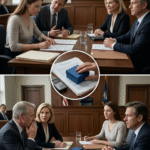
“Mr. Vance has brought serious allegations against Ms. Rhodes. He claims she violated her non-compete agreement and stole proprietary information from his company before joining us. Mr. Vance, present your evidence.”
Hunter stood, clicking through a PowerPoint presentation that would’ve made any lawyer proud. The doctored emails. The fake timestamps. The manufactured chat logs.
“As you can see,” Hunter concluded, “Ms. Rhodes systematically downloaded client information to her personal computer in the two weeks before her resignation. She then used that information to steal our clients after joining Nexus. This is clear theft of trade secrets, and I’m prepared to sue both her and this company for damages in excess of ten million dollars.”
The room was silent. Beatrice turned to me.
“Do you have anything to say?”
I stood up. I didn’t look nervous. I didn’t look scared. I looked like someone who’d been waiting for this moment.
“I do.”
I opened my laptop and connected it to the room’s projection system.
“Mr. Vance’s evidence is impressive. Unfortunately for him, it’s also completely fabricated.”
I clicked. A dense spreadsheet appeared on the screen.
“This is the cloud audit trail for my user account from my time at Mr. Vance’s company. It’s an immutable log maintained by the cloud service provider—Microsoft Azure, in this case. These logs cannot be altered, deleted, or modified by anyone, including system administrators.”
I highlighted a row in the spreadsheet.
“This is the file that Mr. Vance claims I downloaded on January 10th, two weeks before my resignation. The timestamp he provided shows the file was accessed at 2:15 p.m. on that date.”
I clicked again.
“However, the cloud audit trail shows something different. This file was actually created on April 3rd, three months after I had already resigned and left the country.”
Murmurs around the table. Hunter’s face went pale.
“But here’s the interesting part,” I continued, my voice perfectly calm. “The audit trail also shows that the file was created by someone using IT administrator privileges from Mr. Vance’s own computer. He created a backdated file on his local machine, then tried to pass it off as evidence. Unfortunately for him, he forgot that cloud systems maintain separate, unalterable records.”
I clicked through more screens, each one showing discrepancies between Hunter’s evidence and the actual cloud records.
“Every single piece of evidence Mr. Vance provided is fabricated. And I can prove it, down to the timestamp.”
The room erupted. One of the board members, a gray-haired man named Peterson, leaned forward.
“Mr. Vance, this is a serious accusation. Are you saying Ms. Rhodes is lying about these cloud records?”
Hunter stood, his face red.
“Those records could be… could be manipulated. She probably—”
“They can’t,” Carmen said, stepping into the room. I had asked her to wait outside until needed. “I’m Carmen Reeves, digital forensics specialist. I pulled these records directly from Microsoft servers with proper legal authorization. They’re cryptographically signed and timestamped. They cannot be altered. What Ms. Rhodes is showing you is the objective truth.”
Beatrice’s eyes narrowed.
“Mr. Vance, you came into my company and accused my employee of a crime, using fabricated evidence. Do you have anything to say for yourself?”
Hunter’s mouth opened and closed. Then he tried a different tactic.
“Even if the files are wrong, she still violated her non-compete. She’s working in logistics, and that’s expressly forbidden.”
“My non-compete specified North America and Europe,” I interrupted. “I spent a bit more than a year in South America, which falls outside that geographic restriction. I didn’t violate anything. But you just committed fraud and attempted to extort this company. That’s a crime.”
The silence in the room was deafening. I picked up my phone and set it on the table.
“But there’s something else you should know, Mr. Vance. While you were busy fabricating evidence against me, I was doing some research of my own.”
I clicked my laptop again. A customs form appeared on the screen.
“This is a harmonized system code—an HS code—for a container you shipped last month. You declared it as rubber shoe soles under HS code 6406.2, which carries a tariff rate of only 2.5%.”
I clicked again. A photograph appeared—the contents of a shipping container, packed with high-end finished leather shoes.
“However, the container actually held finished men’s leather footwear, which should have been declared under HS code 6403.99. Not only is the base tariff 8.5%, but since these were imported from a specific region with active trade sanctions, they are subject to an additional 25% anti-dumping duty. You’ve been systematically mislabeling containers to avoid paying nearly thirty percent in taxes. That’s customs fraud.”
Hunter’s face went from red to white.
“Where did you get those photos?”
“I didn’t,” I said calmly. “But U.S. Customs did. I filed an anonymous tip three days ago. They opened your container for random inspection this morning at the Port of Long Beach. Based on what they found, they’re currently obtaining a warrant to audit your company’s import records for the past five years.”
As if on cue, the door to the conference room burst open. Two people in dark suits with badges hanging from their necks stepped inside.
“Hunter Vance? I’m Special Agent Morrison, U.S. Customs and Border Protection. We have a warrant for your company’s records and need you to come with us for questioning.”
The room exploded into chaos. Hunter was yelling something about lawyers. Beatrice was on her feet. The other board members were talking over each other.
I calmly closed my laptop and picked up my bag. I walked past Hunter as the agents were reading him his rights. I didn’t gloat. I didn’t smile. I didn’t say a word.
I simply left him there, his career collapsing around him, just like he’d tried to do to me.
Karma, it turned out, was even more efficient than a well-organized supply chain.
Later that evening, Beatrice called me into her office.
“That was the most spectacular professional takedown I’ve seen in thirty years,” Beatrice said, pouring two glasses of scotch. “How long have you been sitting on that customs fraud information?”
“Since month six in Peru,” I admitted. “I heard rumors about his shipping practices through the supplier network. I started documenting everything, just in case. I knew he’d come after me eventually. Men like Hunter always do.”
Beatrice handed me a glass.
“You played the long game.”
“I learned it from my family,” I said. “They taught me that people will take everything from you if you let them. So I stopped letting them.”
We clinked glasses.
“By the way,” Beatrice said, “the board voted. You’re getting a promotion. Senior Vice President of Global Operations. Effective immediately. $50,000 raise and a seat at the executive table.”
I set down my glass.
“I don’t know what to say.”
“Say yes, then get back to making me rich.”
I smiled.
“Yes.”
Two weeks after this incident, I met the people who shared my DNA.
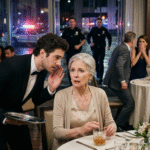
The restaurant was called Virtue, an upscale establishment in Hyde Park with exposed brick walls and Edison bulb lighting that cost more per hour of operation than most families spent on groceries in a week. I had chosen it deliberately—public enough that my family wouldn’t cause a scene, expensive enough to make them uncomfortable.
I arrived first, wearing a charcoal gray suit that had cost more than the entire monthly budget I used to manage for the family. The hostess recognized me—I’d been here three times already for client dinners—and led me to the private dining room I’d reserved. I sat down, ordered a glass of wine, and waited.
They arrived together, a united front. Dad and Mom came through the door first, and I was struck by how much older they looked. Dad’s hair had gone completely gray. Mom’s face had new lines around her mouth and eyes. They looked tired, worn down.
Nicole came next, visibly pregnant now, her hand resting protectively on her belly. She wouldn’t meet my eyes. And finally, Emily, dressed in clothes that I recognized as being from last season’s collection, her usual designer accessories conspicuously absent. She looked angry before she’d even sat down.
“Abigail,” Mom said, her voice wavering between relief and reproach. “You came back.”
“I’ve been working downtown. I just didn’t tell you.”
The implication hung in the air. I’d been back and I hadn’t called.
Dad cleared his throat.
“We got your emails, one a month. ‘I am alive and healthy.’ Do you know what that did to your mother?”
“Yes,” I said. “I do. It gave you proof of life without giving you any way to track me down or drag me back into fixing your problems. That was the point.”
Emily slammed her hand on the table.
“Your problems? Your problems? Do you have any idea what you did to us? Dad almost lost the house. Mom had a panic attack every time the phone rang. Nicole’s wedding was a disaster. You’re so selfish, Abigail. You just disappeared and left us all to suffer.”
I took a sip of my wine, perfectly calm.
“Left you to suffer? Or left you to handle your own affairs for the first time in your lives?”
“We’re family,” Emily shouted. “You don’t just abandon family.”
“Family,” I repeated, my voice cold. “Is that what we are, Emily? Because family doesn’t steal $4,000 meant for plane tickets and use it to upgrade themselves to first class while leaving their sister to find a hostel. Family doesn’t give away someone’s bedroom to a stranger at their own sister’s wedding.”
Mom flinched.
“That was a mistake, honey. We didn’t think—”
“No, you didn’t think. You never do. You just assume I’ll figure it out. Because I always do, right?”
The table fell silent. A waiter appeared with menus, sensing the tension but professionally ignoring it. They ordered quickly, mechanically. Nobody was really hungry.
When the waiter left, I continued.
“But let’s talk about family, Emily, since you brought it up.”
I reached into my bag and pulled out a manila envelope, yellowed with age. I placed it on the table.
Emily’s eyes went wide. She recognized it.
“No,” Emily whispered. “You wouldn’t.”
“Open it,” I said to my parents.
Dad reached for the envelope with shaking hands. He pulled out the contents—police reports, court documents, lawyer’s invoices. His face went slack as he read. Mom leaned over his shoulder, her hand flying to her mouth.
“Four years ago,” I said, my voice perfectly level, “Emily got drunk at a party. She decided to drive home anyway. She lost control of the car, jumped a curb, and plowed into a parked 1965 Jaguar E-Type. Totaled it. And then she fled the scene.”
Dad looked up, horrified.
“A hit and run?”
“A felony hit and run with massive property damage,” I corrected. “The owner of that Jaguar was a litigious real estate mogul. He wanted blood. He wanted to press charges that would have left Emily with a permanent criminal record and potentially prison time.”
Emily was crying now, silent tears streaming down her face.
“She came to me,” I continued. “Begged me not to tell you. Said it would kill you. So I liquidated my entire savings account. $15,000 for a specialist attorney who managed to get her into a diversion program so the charges would be dismissed upon completion. Another $3,000 to settle the civil damages that insurance refused to cover because she fled the scene. I cleaned out my emergency fund, my 401(k), took the early withdrawal penalty—everything.”
I looked directly at Emily.
“I saved you from a criminal record. I saved your future. I kept your secret for four years. And you repaid me by selling fabricated evidence about me to my former boss for $10,000.”
The silence was absolute. Nicole spoke for the first time, her voice barely a whisper.
“Emily, is this true?”
Emily couldn’t speak. She just nodded, mascara running down her cheeks.
Dad pushed his chair back from the table, staring at Emily like he didn’t recognize her.
“You did what?”
“Hunter Vance approached me,” Emily sobbed. “He said Abigail had violated her contract, that she’d stolen from him. He offered me money, and I—I needed it. Mom and Dad cut off my cards. I couldn’t pay rent. I didn’t know what else to do.”
“So you framed your sister?” Nicole’s voice was sharp, angry in a way I had never heard before. “The sister who kept you out of jail?”
“I didn’t think it would work. I thought—I don’t know what I thought.”
Emily’s sobs were getting louder. Mom was crying too now.
“Abigail, I’m so sorry. I didn’t know. About any of this.”
“Of course you didn’t know,” I said. “Because I handled it. I handled everything. Your taxes. Your passwords. Your bills. Your problems. I was your free IT department. Your accountant. Your personal assistant. Your emergency contact. And your ATM machine. And you took it all for granted.”
Dad’s voice was broken.
“We didn’t realize.”
“You didn’t want to realize,” I interrupted. “Because realizing would have meant feeling guilty. Would have meant changing. It was easier to just let me handle everything and tell yourselves I was so capable and didn’t mind helping.”
The food arrived. Nobody touched it. After a long moment, Dad spoke again.
“The IRS penalties. The credit card debt. We had to sell the lake house. We barely got anything for it. It was a distressed sale. We needed the cash immediately. I’m sorry you had to find out this way. But we don’t own it anymore.”
I set down my wine glass.
“I know.”
Dad blinked.
“You know?”
“The mysterious LLC that bought it this morning? That was me.”
The table erupted.
“What? How? You bought the lake house?”
I pulled a set of keys from my purse and set them on the table. I didn’t hand them to anyone, just let them sit there, gleaming under the Edison bulbs.
“I bought it back. Paid cash. Twenty percent above market value to make sure my bid was accepted immediately. The deed is in my name. My LLC. My property.”
Dad’s hands were shaking.
“Why would you do that?”
“Because you’re right, it shouldn’t have been sold. It’s been in the family for twenty years. Grandpa built that deck himself. Mom planted those rose bushes. It matters.”
Mom reached for the keys. I pulled them back.
“But here’s how it’s going to work from now on,” I continued. “You can still use it. You can still have your summer vacations there. Your Fourth of July barbecues. Your Christmas gatherings. For free. I won’t charge you rent.”
Dad exhaled in relief.
“However…” I continued, my voice hardening. “I decide who’s allowed there. I decide who sleeps in which room. And I decide who’s welcome on my property.”
I looked directly at Emily.
“You’re banned.”
“What?” Emily gasped.
“Until you pay back every penny you owe me,” I said, calculating it aloud. “$15,000 for the lawyer. $3,000 for the civil settlement. Let’s calculate simple interest at five percent annually for four years. That’s another $3,600. That brings the total to $21,600. Add to that $10,000 you took from Hunter to betray me.”
I leaned forward.
“That is a grand total of $31,600. I’ll send you an invoice.”
Emily’s face crumpled.
“The lake house is my favorite place in the world. You can’t—”
“I can. I do. Those are my terms.”
Emily looked to her parents for support. Dad and Mom both looked away. Nicole spoke up, her voice quiet but firm.
“You earned this, Emily. You did this to yourself.”
Emily burst into fresh sobs, but this time, nobody moved to comfort her.
The waiter appeared to clear the untouched food, reading the room and disappearing quickly.
Mom dabbed at her eyes with her napkin.
“What do you want from us, Abigail? How do we fix this?”
I stood, picking up my bag.
“I don’t want anything from you. That’s the point. I don’t need you anymore. I don’t need your approval, your validation, or your love. I needed those things when I was the family doormat, but that person died in a hostel room in Peru.”
I pulled out my wallet and placed $300 in cash on the table.
“Dinner’s covered. Consider it a final gift.”
I walked toward the door, then paused and turned back.
“You can keep using the lake house. You can keep having your family gatherings, but from now on, you do it on my terms. Because I hold the keys, I hold the deed, and I hold all the cards.”
I looked at each of them in turn.
“Welcome to what it feels like when someone else has all the power. I hope you learned something from it.”
Then I walked out of the restaurant, leaving my family sitting in stunned silence around a table full of cold, untouched food.
Outside, the Chicago night was crisp and clear. I stood on the sidewalk for a moment, breathing in the cool air. I felt lighter than I had in years.
The first-class lounge at O’Hare Airport was everything Emily’s Instagram posts had promised it would be—leather armchairs, complimentary champagne, floor-to-ceiling windows overlooking the runways. I settled into a corner seat with a view of the departing flights, a glass of champagne in one hand and my tablet in the other.
I was reviewing contracts for the Tokyo negotiation. Nexus was expanding into the Asian market, and Beatrice had chosen me to lead the initiative. It was the kind of opportunity that would have seemed impossible two years ago.
Two years. Had it really only been two years since that phone call from my mother? Since the freezing rain and the betrayal and the decision to disappear? It felt like a lifetime ago. It felt like it had happened to someone else.
My phone buzzed against the armrest. A text message.
Mom.
Happy birthday, daughter. I’m sorry for everything. I’m proud of you.
I stared at the message for a long moment. A year ago—hell, six months ago—those words would have meant everything. I would have felt the rush of validation, the desperate relief that came from finally being seen, being appreciated.
Now?
I felt nothing. Not anger. Not satisfaction. Not even the bitter pleasure of vindication.
Just… nothing.
It was my thirtieth birthday. I’d forgotten about it entirely until my assistant had sent me a reminder yesterday, asking if I wanted the day off. I’d declined. I had work to do.
My fingers hovered over the keyboard. I could write something warm, something that opened the door to reconciliation. I could write something cutting, something that twisted the knife. I could write an essay explaining everything they’d done wrong and everything I’d learned.
Instead, I typed six words.
Thanks, Mom. I’m busy in a meeting.
Polite. Distant. Professional.
I hit send, then immediately switched my phone to airplane mode.
The boarding call came over the loudspeaker. First-class passengers were invited to board at their convenience. I gathered my things and walked to the gate. The flight attendant scanned my boarding pass with a smile.
“Welcome aboard, Ms. Rhodes. We’re so glad to have you flying with us today.”
I settled into my seat—1A, window—and accepted a glass of champagne from the attendant. The seat was wide and comfortable, with enough legroom to stretch out completely. The kind of seat Emily had enjoyed on my $4,000.
But this time, I had paid for it myself. With money I’d earned. For a trip I’d chosen. To a destination I’d selected.
Nobody had stolen it. Nobody had taken advantage of me. Nobody had assumed I’d just figure it out.
The plane pushed back from the gate, and I looked out the window as Chicago began to shrink below me. I could see the lake, dark blue in the afternoon sun. Could see the skyline. The buildings where I’d worked and struggled and finally succeeded.
I thought about the lake house. About my parents, probably planning their summer vacation there, walking on eggshells, wondering if I’d change my mind. About Emily, working whatever job she’d managed to find, calculating how long it would take to save $31,000 on an influencer’s uncertain income. About Nicole, who’d called three days after the dinner to apologize, who’d admitted she’d always known the family took advantage of me but had been too comfortable with her own golden child status to say anything, who’d asked if we could start over.
As real sisters this time, not as user and utility.
I had said maybe. I wasn’t ready to close that door completely. But I wasn’t ready to open it wide either.
The plane lifted off, pressing me gently back into my seat. Through the window, I watched Chicago disappear into the distance, becoming just another city on the map.
I wasn’t running anymore. I wasn’t hiding. I was simply living my own life, on my own terms, answerable to no one but myself.
I closed my eyes and smiled.
For the first time in my entire life, I was free.