My fiancé’s dad joked at our engagement party: “my son is marrying 10 rungs below him.” I laughed and said: “he’s right.” then I took the mic, thanked him for his honesty, and announced the wedding was off. What he did when I handed his son the bill for the entire party…
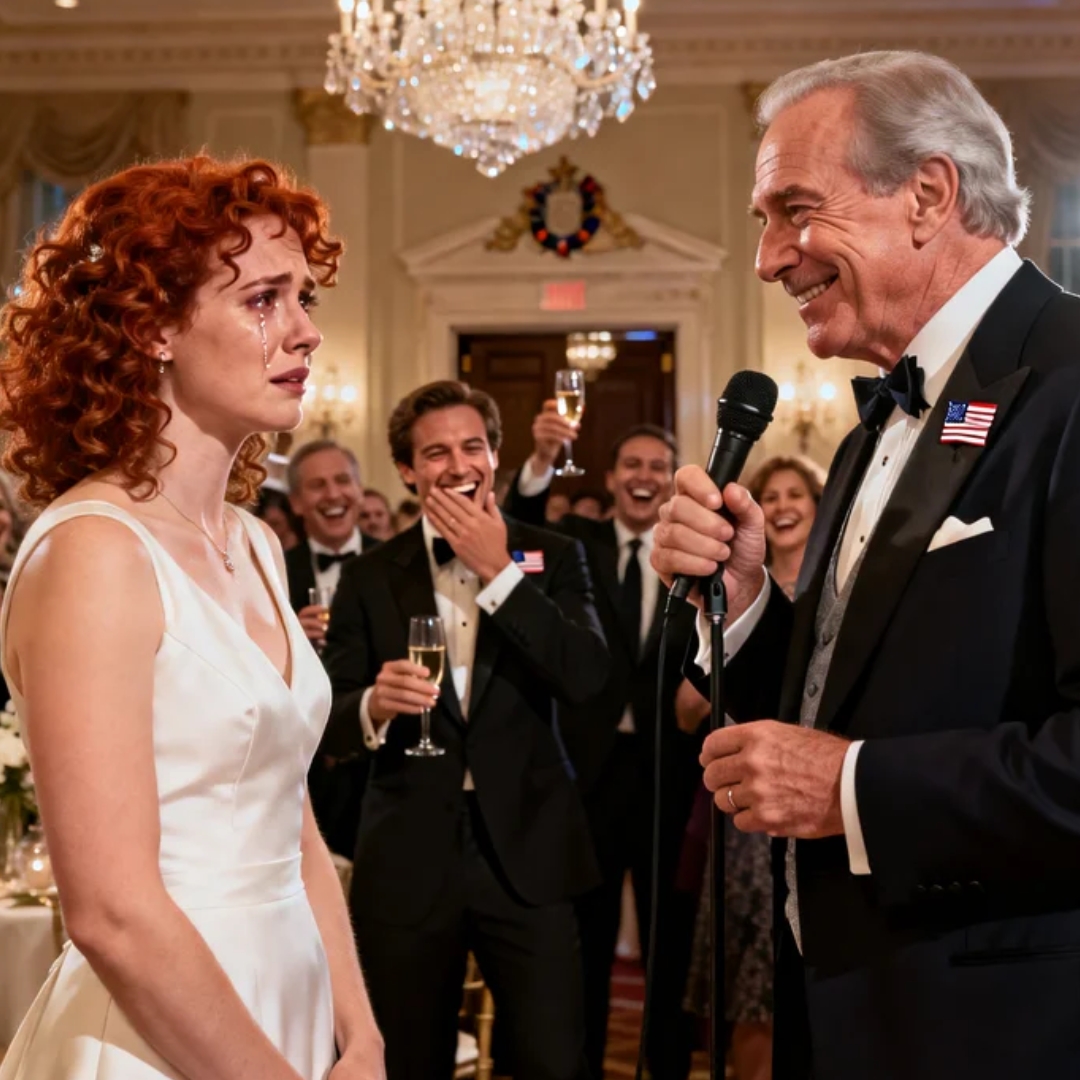
The first time Frederick West tried to break me, he didn’t raise his voice.
He raised a champagne glass.
The crystal caught the chandelier light like a blade, and the entire country club went quiet—not because he was important, but because everyone knew what came next when a man like him stood up. The rich don’t shout. They don’t have to. Their cruelty is polished, packaged, and served like dessert.
And that night, with two hundred people watching, Frederick West smiled at me like I was a charity case he’d been forced to entertain… and decided I would be the punchline.
My name is Sienna Brooks, and I’m thirty-two years old.
On paper, my life doesn’t look like something you’d put over slow-motion footage of a sunrise. It doesn’t sparkle. It doesn’t shimmer. It doesn’t have vacation photos in Santorini or matching pajamas at Christmas. What it has is stability built from sweat, invoices, and a business credit line that feels like a shark swimming circles around my ribs.
I’m a custom furniture maker.
I own a small workshop on the edge of an industrial district, tucked between an auto body shop and a tile warehouse that always smells like dust and broken promises. I build high-end bespoke tables, chairs, cabinets—the kind of furniture people call “investment pieces” in reverent tones like they’re talking about art.
But the truth is, I end most days covered in sawdust and glue with a pencil behind my ear, ruined nails, sore shoulders, and a permanent callous on my palm where the sander hits every time I chase perfection. It’s not glamorous.
It’s mine.
The tools, the sketches pinned to my wall, the smell of walnut and oak—it all exists because I refuse to be the kind of person who just orders a life out of a catalog. I build things that outlive trends and hashtags.
People see “small business owner” and think artisan.
I see amortization schedules, late client payments, and a credit line that breathes down my neck like it’s jealous I ever sleep.
I met Julian West four years ago.
Julian was the kind of man who looked like he’d been born on velvet. Clean lines. Expensive watch. That razor-sharp jawline that belongs in a cologne ad. He worked in art curation—modern installations, gallery experiences, all that high-gloss world where people speak in metaphors and always have perfect teeth.
He walked into my workshop like he was entering a museum.
A designer friend had referred him. He needed custom display pedestals for a gallery opening. “Minimal but soulful,” he said, like he was describing a lover instead of plywood.
I remember wiping my hands on my apron, trying not to look as tired as I felt, while he ran his fingers over the edge of a walnut table I’d just finished.
“You built this?” he asked, voice warm.
“Every joint,” I said. “Even the mistakes.”
He laughed—soft, smooth, like he’d never once paid a late fee.
He liked that. Julian liked authenticity as long as it could be framed in good lighting and white walls.
Somewhere between the measurements and the delivery schedule… between his little check-in visits that lasted longer than they needed to… we slipped from client and vendor into something else.
Coffee turned into late dinners. Quick visits turned into slow mornings.
When he asked me to be his girlfriend, it was right there in my workshop, standing between stacks of lumber and a half-finished bookcase.
His tie was loosened. He was holding takeout containers. He looked like a man stepping out of a commercial for “the perfect life,” except his eyes were real.
“I’d like to stop pretending I come here just to check on pedestals,” he said.
I said yes before my brain could talk my heart out of it.
There was one problem with Julian West.
His family.
The Wests weren’t “we’re comfortable” rich.
They weren’t “we have a vacation home” rich.
They were old-money rich. Board-of-three-charities rich. People-whisper-when-they-enter-a-room rich. The kind of wealth that doesn’t just buy you things, it buys you certainty.
And certainty makes people cruel.
Julian’s father, Frederick West, sixty-one, had built an entire life out of owning everything.
Companies. Properties. Influence. People, in a way.
He had that polished contempt that didn’t even bother hiding. His suits were tailored and so were his insults. Whenever he was around, he treated me like a novelty item Julian picked up at a flea market.
“Si,” he’d say, swirling his wine, “must be nice to just… make things.”
“So rustic.”
Or he’d glance at Julian and say, “Darling, are you sure you want to go to her workshop? You’ll get splinters.”
He never said the words beneath you.
He didn’t have to.
It hung in the air between every sentence like perfume.
Julian would chuckle, embarrassed, and murmur, “Dad, stop.”
Later, he’d hold me in my tiny kitchen and say, “You know I’m not like them, right? My father is just old-fashioned.”
And I wanted to believe him. God, I wanted to believe him.
So when Julian proposed, I said yes before he even finished the sentence.
He did it in my workshop again—of course he did—like he wanted to rewrite the narrative. This time he actually knelt in the sawdust, velvet box in his elegant hands, voice trembling.
“Sienna Brooks,” he said. “Will you marry me so I can keep pretending I know anything about wood grain for the rest of my life?”
I laughed.
I cried.
I said yes.
The ring was insane. A 2.5-carat diamond so bright it felt like it was trying to blind my imposter syndrome. I built a walnut box for it myself, like I could contain the future inside something honest.
Then came the engagement party.
Julian wanted it at his parents’ country club, of course. The one with the six-figure initiation fee and a waiting list full of names I’d seen in magazines.
He sat me down with that pleading look.
“I know my dad can be a lot,” he said. “But this matters to them. They want to host for appearances. Let them have this.”
I hesitated.
My parents were a retired librarian and a nurse. Their idea of a party was a backyard cookout where someone brought potato salad in a reused margarine tub. They would look like they’d wandered into a movie set at that club.
But I wanted to be gracious.
I wanted to be the fiancée who could move between worlds.
“Okay,” I said. “We’ll do it at the club.”
A week later, Frederick asked to speak with me.
We were in his study.
The kind of room that smells like leather, old books, and money that never had to sweat. He sat behind his desk. I sat in a chair that probably cost more than my first car.
“Sienna,” he began smoothly, like he was about to compliment me.
“About this engagement party. I’ve seen your guest list.”
He paused.
“It’s quite… full.”
I clasped my hands in my lap.
“We both have people who love us,” I said carefully. “I wanted everyone important included.”
“Of course.” His smile was sharp. “Naturally, I will cover my own guests. Our family, my associates, our friends.”
He leaned back like a king granting mercy.
“Your contingent, however, will be your responsibility.”
It took me a second to process.
“My contingent?” I repeated.
“Your parents. Your friends. The… tradespeople,” he said, like he was saying the word strays.
“It’s only fair,” he added. “Julian is marrying someone independent. Surely you’d prefer to pay your own way.”
He used the word independent the way some people use the word burden.
Clara, Julian’s mother, shifted uncomfortably in the corner. Her pearls trembled faintly.
“Frederick,” she murmured. “Really?”
“I’m being perfectly reasonable,” he said, like he hadn’t just handed me humiliation wrapped in a ribbon.
Something cold rose inside me.
Not anger.
Not emotion.
Just… a hardening.
“You know what, Frederick,” I said, voice steady, pulse not. “Don’t worry about it. I’ll pay for the whole thing.”
He finally looked at me then—eyes faintly amused.
“The whole party?” he asked.
“Yes,” I said. “All of it.”
Julian walked in mid-sentence and froze.
“Si, no,” he said. “It’s thousands.”
“I’ve got it,” I said, still staring at Frederick. “I wouldn’t want to burden anyone.”
Frederick’s mouth curved into a satisfied smile.
“As you wish.”
So I did.
I put the deposit on my business Amex and tried not to flinch at the number.
The quote made my stomach drop.
Nineteen thousand two hundred dollars.
For one night.
Almost everything I’d saved.
The planner I’d been dreaming of. The down payment on a new work truck. The margin of safety that kept my business breathing.
I told myself it was an investment.
In our future.
In the life I was about to step into.
The engagement party was last night.
The country club looked like a movie set.
Chandeliers glittered.
A string quartet played tasteful music.
People with names like Biff and Muffy glided around in outfits that probably cost more than my monthly rent.
My parents arrived in their Sunday best.
My mom smoothed her thrift-store dress three times in the foyer. My dad kept adjusting his tie like he was afraid it would betray him.
“You look perfect,” I told them, linking my arms through theirs. “You belong here as much as anyone.”
They smiled. But their eyes kept darting—crystal glasses, white tablecloths, waiters moving like ghosts.
I spent the first hour getting them drinks, walking them around, introducing them gently.
Julian floated from group to group, kissing cheeks, shaking hands with people whose last names came with foundations attached. Every time I looked up, he was across the room laughing with someone I didn’t know.
By the time dessert was served, my feet hurt, my cheeks ached from smiling, and I felt more like an event coordinator than a bride-to-be.
Then came the toasts.
Frederick took the microphone, of course.
He stood at the front of the room, champagne flute in hand, the picture of gracious patriarch energy.
And the room quieted.
The quartet faded out.
Frederick looked at Julian with public affection.
“To my brilliant, successful son,” he began. “You’ve always had exquisite taste. In art. In fashion. In life.”
He paused.
His eyes slid to me.
“And when you brought Sienna home,” he continued, chuckling, “I’ll be honest… I was concerned.”
Laughter rippled through the room.
The kind of practiced laughter rich people use when they’re being told it’s safe to be cruel.
“It’s not every day,” Frederick went on, “that a son who has had every advantage decides to marry…”
He leaned into the microphone.
“Well, let’s be honest—about ten rungs below him.”
The room erupted.
Not in gasps.
In laughter.
Loud, delighted laughter.
It was a slow-motion crash.
I saw my mom’s face drain of color.
I saw my dad’s jaw tighten as he stared down at his hands.
I saw shoulders shaking, mouths curving around the word rungs like it was comedy gold.
And then I saw Julian.
He was laughing.
Hand over his mouth.
Shoulders shaking.
Eyes crinkling as he looked at his father like he’d delivered the punchline of the century.
He caught my gaze across the room.
Still grinning.
And he gave me a little shrug.
What can you do? It’s just Dad.
Something inside me went quiet.
Not numb.
Clear.
Cold.
Like a door locking.
I heard myself laugh once.
A short, sharp sound that cut through the room.
Frederick blinked, startled, and tilted the microphone toward me.
“Ah,” he said. “She’s a good sport. She knows it’s true.”
I stood up.
Smoothed my dress with hands that didn’t shake.
And walked toward him.
The room waited.
People love a spectacle. Especially when it’s someone else bleeding.
“I think he’s right,” I said.
The laughter died instantly.
Frederick blinked.
“He’s absolutely right,” I repeated, taking the microphone gently from his hand. “Thank you, Frederick. For your honesty.”
The room went so still I could hear the air conditioning hum.
I turned to the crowd.
“You’ve made me realize something important,” I said.
“Julian deserves someone on his level. Someone appropriate.”
A murmur rippled.
I looked at my parents.
My mom’s eyes were glassy.
My dad’s knuckles were white.
“And I,” I continued, throat tight but voice steady, “deserve a family that doesn’t see me as a punchline.”
“I deserve a partner who doesn’t laugh when I’m publicly humiliated.”
“And my parents deserve to be treated with respect… not as a ‘contingent.’”
Julian’s smile had frozen.
“Sienna,” he hissed. “What are you doing?”
“You’re making a scene.”
“No,” I said softly.
“Your father made a scene.”
“You laughed at it.”
“I’m just ending the show.”
I lifted my glass slightly.
“To Julian,” I said. “I wish you the best.”
“The wedding is off.”
The silence was violent.
Someone dropped a fork.
Julian grabbed my arm.
“Sienna—this isn’t funny.”
“I’m not joking,” I said.
I placed the microphone down gently on the nearest table like I was putting something toxic away.
Then I turned and walked straight to the event coordinator by the doors.
“Could I get the final itemized bill?” I asked quietly.
Her face went pale.
A minute later she returned with a printed statement.
$19,200.
Already charged to my card.
I walked back to Julian.
He was breathing hard like he’d just run a race.
“Let’s go outside,” he said, forcing a smile for the guests. “We can fix this.”
I held out the bill.
“You should keep this,” I said.
He stared.
“What is that?”
“It’s what I just paid for,” I said.
“For your party. Your guests. Your club.”
“You and your father can figure it out.”
He looked at the number like it was written in another language.
“Sienna…”
But I was already turning away.
I went to my parents.
My dad stood without a word and put a hand on my shoulder.
My mom looped her arm through mine.
“We’re leaving,” I said.
We walked out.
Past chandeliers.
Past marble.
Past the laughter that had died into whispers.
Out into the cool night air that felt like the first honest breath I’d taken all evening.
By the time we reached my truck, my phone was buzzing.
Call after call.
Message after message.
I didn’t answer.
I started the engine.
The sound was loud, rough, real.
And as we drove away from that country club, the reality settled over me like a weight…
and a sharp, clean relief.
Because yes.
I had just blown up my engagement.
And yes.
I had just put nineteen thousand dollars of humiliation on my credit card.
But I had also done something that would change the rest of my life.
I had refused to be smaller so someone else could feel tall.
For three days, my phone might as well have been a weapon.
Julian’s messages all sounded the same.
How could you do that to me?
Dad was joking.
You can’t take a joke.
You made a scene.
You embarrassed us.
Frederick left a voicemail that made my stomach twist.
“You’ve got spirit,” he said, voice smooth. “But you made your point. Apologize to my son and I’ll consider paying twenty-five percent of the cost, as a gesture.”
A gesture.
Like he was doing me a favor.
They all thought it was a negotiation.
They thought I’d crawl back.
They thought I’d beg.
The entitlement was almost impressive.
Until it became dangerous.
Because my business started bleeding.
Clients stopped calling.
Two interior design firms dropped me within a week.
The excuses were identical.
“Budget concerns.”
“Change of direction.”
I knew what it was.
Frederick West didn’t need to destroy me loudly.
He just needed to tilt the boardroom table and let gravity do the rest.
Julian destroyed me in public.
Frederick destroyed me in private.
A two-pronged chokehold with silk gloves.
That’s when I called Miguel Santos.
Miguel didn’t look like the kind of lawyer rich people hire. He looked like someone you’d want on your side in a fight. Thick beard. Heavy brows. Calm eyes.
I told him everything.
The contingent conversation.
The humiliation.
The “ten rungs below.”
Julian laughing.
The bill.
The threats.
Miguel sat back and stared at the ceiling like he was doing math.
“They hate two things,” he said finally.
“Public scandal… and losing.”
He looked at me.
“We’re going to use both.”
Within a week, we filed.
Not a threat.
A lawsuit.
Breach of promise. Reimbursement. Conditional gift. Tortious interference.
My story became a public record.
And old money hates public records.
Forty-eight hours later, the West family’s attorney called.
He didn’t sound smug this time.
He sounded… tense.
“My clients are displeased with this public spectacle,” he said.
“So am I,” I replied. “It’s expensive.”
They offered to settle with no money exchanged.
Miguel laughed so hard I heard it from across the table.
“Counter,” he said.
“Full reimbursement and return of the ring.”
“And if they don’t?” I asked.
Miguel smiled like a man who enjoyed cross-examination.
“Then we subpoena Frederick West and make him explain ‘ten rungs below’ under oath.”
That did it.
A week later, we sat in a downtown conference room so high it looked down on the clouds.
Frederick looked smaller.
Clara looked pale.
Julian looked exhausted—still perfect on the outside, but brittle underneath.
Miguel slid the settlement across.
Frederick signed.
Julian’s attorney placed a cashier’s check in front of me.
$19,200.
Then Julian slid a walnut box across the table.
My walnut box.
The one I built.
I opened it.
The ring sat inside, glittering like a lie.
I closed it.
And something in me finally unclenched.
As we stood to leave, Frederick spoke.
“You’ll regret this,” he said quietly. “You’ve made a powerful enemy.”
I turned back.
“No,” I said.
“I made a clean break.”
And then I walked out.
That night, I sat in my workshop after dark.
The check was in my account.
The ring was locked away.
The shop was quiet except for the hum of my old fridge in the corner.
I ran my hand over a rough slab of oak.
And I finally understood something.
I wasn’t ten rungs below anyone.
I was just standing on a ladder they didn’t respect because they never built one with their own hands.
I turned on the planer.
The roar filled the room.
Wood shavings curled like pale ribbons.
The scent of raw oak rose into the air.
And for the first time in months…
I felt peace.
Real peace.
The kind that doesn’t sparkle.
The kind you build.
The second the planer kicked on, the workshop filled with a roar so loud it felt like it could swallow everything—Frederick’s laughter, Julian’s shrug, the chandelier light, the word rungs.
Wood shavings curled in pale ribbons at my feet like the floor was shedding skin.
That sound used to calm me. It used to make the world predictable again—raw material going in, something stronger coming out. But that night it didn’t calm me.
It reminded me.
I’d built my entire life with my own hands. Every chair leg, every dovetail joint, every sanded edge. And yet one polished man with a microphone had been able to reduce me to a joke in front of my parents in under ten seconds.
Not because I was weak.
Because I was surrounded by people who were trained to clap when someone else got humiliated.
The check was already sitting in my business account. Nineteen thousand two hundred dollars. The number felt like it belonged to someone else’s life. But my Amex balance hadn’t been imaginary. The interest hadn’t been imaginary. Those weeks of waking up at 3 a.m. with my stomach clenched hadn’t been imaginary either.
And now the ring was back too.
The ring sat in the walnut box like a tiny frozen star—cold, flawless, expensive.
I stared at it until my eyes burned.
Then I shut the lid and locked it in my safe.
Not because it still meant anything.
Because it was proof.
Proof that I wasn’t crazy. Proof that I hadn’t “overreacted.” Proof that I hadn’t “made a scene.”
I hadn’t ruined anything.
I had simply refused to keep swallowing my own humiliation.
I sat on the edge of my workbench, still wearing the same sawdust-covered clothes, and let myself think about something I’d been avoiding.
Julian.
The Julian I met wasn’t cruel. Not directly. He was sweet in ways that made you believe in romance again. He’d brought me coffee to the shop and kissed my forehead like I was precious. He’d listened when I talked about wood grain like it was poetry. He’d laughed when I got glue on my cheek and called me “real” like it was the highest compliment.
But there’s a difference between loving someone…
and being willing to stand with them.
Julian loved me the way people love an interesting hobby.
He loved me as long as it didn’t cost him anything.
The moment it did—when his father humiliated me publicly—he didn’t defend me.
He laughed.
Like the joke was safe.
Like my pain was just background music to his family’s dinner theater.
And suddenly I remembered every small moment I’d ignored.
Every time Frederick’s “jokes” got sharper and Julian brushed it off.
Every time Clara asked me, with a smile too bright, if my parents were “comfortable” coming to events like theirs.
Every time Julian called me “scrappy” like it was cute.
Like I was a little rescue dog he’d picked up off the highway.
I had mistaken his fascination for respect.
And for a while, I had been proud of myself for “fitting into their world.”
But now?
Now I realized something ugly.
I had never been invited into their world.
I had been allowed to orbit it.
Like a novelty.
Like a story they could tell at brunch.
“Julian is dating a furniture maker!”
How quirky.
How rustic.
And that night at the club, Frederick had simply said what they all believed.
Out loud.
The next morning, I woke up with the same heavy feeling in my chest, but it was different now. It wasn’t panic.
It was steel.
I went into the shop early and started working before the sun even came up. I measured a slab of white oak and marked my cuts like a surgeon. My hands were steady. My mind was quiet.
And then the texts started again.
Julian: We need to talk. I didn’t mean it. You know I didn’t mean it.
Clara: Sienna dear, please don’t let this become bigger than it needs to be. We can fix this.
Frederick: You got your little check. Now stop playing victim and be reasonable.
That last one made me laugh.
It wasn’t a happy laugh.
It was the kind of laugh you make when you realize someone thinks you’re still under their thumb.
Frederick genuinely believed I would take the money and disappear.
He thought a settlement meant I’d been bought.
He didn’t understand that I hadn’t sued them because I wanted attention.
I sued them because they tried to crush me and I refused to die quietly.
But they didn’t stop.
Because old money never stops.
They don’t accept “no.”
They don’t accept boundaries.
They accept surrender.
So when I didn’t surrender, they pivoted.
Julian posted again.
Not the moody black and white one this time.
A photo of him at a charity event, smiling softly, looking wounded but noble. His caption:
“Some heartbreak teaches you who people really are.”
The comments were worse.
She didn’t deserve you.
You dodged a bullet.
Some women just want drama.
And then someone tagged my business account.
“Warning: this is the woman who humiliated Julian West. Do not support.”
I stared at my phone until my hands started shaking.
Then I walked into Miguel Santos’ office and placed my phone on his desk like it was a dead animal.
“They’re still coming,” I said.
Miguel barely glanced at the screen before his eyes hardened.
“I figured,” he said.
He leaned back, folding his arms.
“They got what they wanted legally. Now they want to destroy you socially.”
“I’m already bleeding,” I said quietly.
Miguel nodded slowly.
“That’s the point.”
He tapped the screen with one thick finger.
“Julian is posting statements.”
“And Frederick is pulling strings behind closed doors.”
“They think you’ll collapse.”
I swallowed.
“What do I do?”
Miguel’s mouth twitched.
“You build.”
I blinked.
“You already know how to build,” he said. “Not furniture. Your life.”
“Right now, they’ve got the narrative.”
“And the Wests don’t just want you broke.”
“They want you ashamed.”
“Because shame is the leash.”
I stared at him.
Miguel leaned forward.
“So we cut the leash.”
“How?” I asked.
Miguel slid a legal pad toward him.
“We’re going to do what rich people hate most.”
“We’re going to make the truth… public.”
My stomach dropped.
Public?
That word felt dangerous.
Miguel kept going.
“We do it clean.”
“We do it factual.”
“No insults. No accusations.”
“We tell the story exactly as it happened.”
“And we do it in a way that protects you legally.”
I swallowed again.
“You mean… I should post?”
Miguel nodded.
“One post.”
“Three paragraphs.”
“Dates. Facts. No emotion.”
“And a photo of the cashier’s check.”
I stared at him like he’d suggested I walk into the Wests’ mansion and throw paint on their walls.
“They’ll come for me,” I whispered.
Miguel’s eyes didn’t flinch.
“They’re already coming.”
“At least this way you control the story.”
I left Miguel’s office and sat in my truck for twenty minutes with the engine off, gripping the steering wheel like it was the only thing keeping me from floating away.
Part of me wanted to stay quiet.
Quiet was safe.
Quiet was what people like Frederick counted on.
Quiet was what kept his power clean and his hands spotless.
But then I thought about my mother.
Her face draining of color.
The way she’d stared at the tablecloth like it was the only thing keeping her from crying.
And I thought about my father.
His hands folded so tightly his knuckles went white.
He’d worked his whole life. He’d raised me to be proud of honest work. And he’d sat there while strangers laughed at him like he was dirt.
Because of me.
Because I’d stepped into their world believing love would protect me.
I went back to my apartment, opened my laptop, and wrote the post.
I kept it simple.
“Last week, my former fiancé’s father made a public remark about my worth at our engagement party.”
“My fiancé laughed. I ended the engagement immediately.”
“The party was paid for entirely by me ($19,200). After legal action, I was reimbursed in full.”
“I’m sharing this because my business has been affected by rumors. These are the facts. I wish them well. Please support small businesses with kindness.”
Then I attached a photo of the check.
Not to brag.
Not to get revenge.
To prove I wasn’t lying.
Then I hit post.
For three minutes, nothing happened.
Then my phone lit up like a siren.
At first it was friends.
Then it was strangers.
Then it was local business owners.
Then it was women who had lived through the same kind of humiliation and had never had the chance to say anything back.
My post got shared.
And shared.
And shared again.
People started tagging Julian’s Instagram posts with screenshots of my statement.
Suddenly, his “wounded romantic” narrative wasn’t so clean.
Because the one thing wealthy families can’t handle…
is a woman with receipts.
Julian’s posts stayed up for a while.
Then, quietly, they disappeared.
His account went private.
And for the first time since the engagement party, I felt something close to vindication.
But Frederick didn’t. And Frederick didn’t forgive.
Two days later, I got an email from a boutique interior design firm that had been one of my best clients.
“We’re going to pause projects until the situation settles.”
Pause projects.
Translation: Frederick had called.
I showed Miguel the email.
Miguel’s eyes went flat.
“Good,” he said again.
“Good?”
“It means he’s panicking,” Miguel said. “When rich men lose control of the narrative, they stop being subtle.”
And Miguel was right.
Because Frederick West made one mistake.
He escalated.
Not through whispers.
Through paper.
A week after my post, I got served a lawsuit.
Defamation.
Intentional infliction of emotional distress.
Interference with business.
The whole list.
Pages and pages of legal intimidation wrapped in formal language.
And there it was, right at the bottom:
Demand for damages: $250,000.
My stomach turned to ice.
They weren’t trying to win.
They were trying to scare me into surrendering.
They wanted me to delete the post, apologize publicly, and go quiet.
Miguel flipped through the pages, then looked up at me with a slow smile.
“Oh, they messed up.”
I stared.
Miguel tapped the complaint.
“They filed in civil court.”
“They just opened discovery.”
My mouth went dry.
“What does that mean?”
Miguel’s voice became almost gentle.
“It means we get to subpoena them.”
“It means Frederick West is going to have to answer questions under oath.”
“It means we get his emails.”
“It means we get the club’s recordings.”
“It means we get the guest list.”
“It means we get the board communications from the design firm that dropped you.”
And then Miguel leaned back, eyes gleaming.
“And it means you’re about to see what happens when a man who’s used to power meets a woman who refuses to bow.”
The next three months were war.
Not dramatic, screaming war.
Cold war.
Depositions.
Legal filings.
Deadlines.
Every time I thought, this is too much, Miguel reminded me:
“They chose this.”
I sat in a deposition room across from Frederick West while he tried to look like he wasn’t sweating.
His lawyer, Thomas Sterling, objected every five seconds like he could block reality.
Miguel asked Frederick to repeat his toast.
Frederick smiled tightly.
“It was just a joke.”
Miguel nodded.
“A joke.”
“Yes.”
Miguel slid a transcript across the table.
“Would you read this out loud?”
Frederick’s smile faltered.
The transcript was from the court reporter at the club.
Frederick swallowed.
Then, stiffly, he read:
“Ten rungs below him.”
Miguel leaned forward.
“And the room laughed. Correct?”
Frederick’s jaw ticked.
“Yes.”
Miguel tilted his head.
“And you were aware that Ms. Brooks had paid for the entire engagement party.”
Frederick hesitated.
Sterling objected.
Miguel waited.
Frederick’s eyes flicked to Sterling like he was begging for help.
But truth doesn’t care about money.
“Yes,” Frederick said.
Miguel’s voice stayed calm.
“So you made a joke about her being beneath your son… at a party she paid for… in front of her parents.”
Frederick’s eyes hardened.
“It was humor.”
Miguel nodded.
“And then your son laughed.”
Frederick’s nostrils flared.
“Yes.”
Miguel turned slightly, like he was addressing a jury.
“And after she ended the engagement, did you contact any business associates to suggest they stop working with her?”
Frederick’s voice sharpened.
“No.”
Miguel’s eyebrows rose.
“So you never contacted the interior design firms she worked with.”
“No.”
Miguel slid another document forward.
A printed email.
Frederick’s words.
“Until she learns her place, I don’t want her receiving commissions in our circles.”
Frederick’s face went gray.
Sterling lunged for the document like he could erase it by touching it.
Miguel smiled slowly.
“Is that your email, Mr. West?”
Frederick’s throat bobbed.
His voice came out smaller.
“Yes.”
The room went silent.
Miguel didn’t raise his voice.
He didn’t gloat.
He just let Frederick sit in the quiet he’d created for himself.
Then Miguel asked, softly:
“And why did you write that?”
Frederick’s eyes flicked toward me.
Full of contempt.
Full of disbelief.
Like I was a bug that had learned how to speak.
And he said the thing he never should have said out loud.
“Because she humiliated my son.”
Miguel blinked once.
Then leaned back.
“So your response to a woman ending an engagement after being publicly insulted…”
“…was to try to destroy her livelihood.”
Frederick’s jaw clenched.
“That’s not what I said.”
Miguel smiled.
“It’s exactly what you said.”
That deposition changed everything.
Because once Frederick’s mask cracked, people started watching.
And wealthy people do one thing well: they distance themselves from scandal.
Suddenly, the design firm that had “paused” my projects called back.
Suddenly, old clients returned.
Suddenly, other firms reached out privately.
“I saw what happened. We’d like to work with you.”
They didn’t call it justice.
They called it business.
But the effect was the same.
Frederick West started losing ground.
Julian tried to contact me twice.
The first time, he sent a long email that read like a carefully curated apology:
“I didn’t understand how deeply it hurt you.”
“I was raised differently.”
“I’m sorry you felt disrespected.”
Sorry I felt disrespected.
Not sorry he laughed.
Not sorry he let it happen.
Just sorry my reaction was inconvenient.
I didn’t reply.
The second time, he showed up at my workshop.
Again.
He stood outside the steel door, hands in his coat pockets, hair perfect, eyes rimmed with exhaustion.
I didn’t open the door.
I didn’t even go to the window.
I just watched him through the security camera feed on my phone.
He stood there for five minutes, looking like someone who’d lost something he never expected to lose.
Then he left.
That’s what people like Julian do.
They don’t fight for you.
They simply wait for you to forgive them so they can go back to being comfortable.
I never gave him that.
Four months after Frederick filed his lawsuit, Sterling called Miguel.
His voice was clipped.
“My clients would like to resolve this.”
Miguel glanced at me and mouthed, Told you.
We met in Sterling’s office again.
Only this time, Frederick wasn’t threatening.
He was tight-lipped.
Clara looked sick.
Julian looked like he hadn’t slept.
Sterling slid a settlement across the table.
Miguel read it.
Then looked up.
“No,” he said.
Sterling blinked.
“This is fair.”
Miguel’s eyes stayed cold.
“It’s not.”
Miguel tapped the paper.
“You’re offering to drop the lawsuit.”
“And you want her to take down her post.”
“And you want her to sign a non-disparagement clause.”
“And you’re offering her nothing for the months of lost income and the emotional damage you tried to inflict.”
Sterling’s jaw tightened.
“She started it.”
Miguel’s voice didn’t change.
“No.”
“Frederick started it.”
“Then he escalated.”
“And now he’s going to pay for it.”
Miguel slid his own document across the table.
Sterling scanned it, face tightening.
“What is this?”
Miguel smiled.
“This is what reality costs.”
He listed it calmly.
A payout for lost revenue.
A payout for legal fees.
A written apology from Frederick West.
And a signed agreement that Frederick would never contact any of my clients again.
Sterling’s mouth tightened.
“My client will never apologize.”
Miguel nodded.
“Then we go to trial.”
“And we subpoena more.”
“And we put his emails on screens in front of twelve people who don’t care what his last name is.”
Frederick’s eyes flashed.
“You think you’ve won,” he hissed at me.
I met his gaze calmly.
“No,” I said.
“I think you finally understand what it feels like to be powerless.”
Frederick flinched.
Just slightly.
Like the words had landed somewhere he didn’t expect.
Because no one ever talks to men like him that way.
Not in rooms like that.
The negotiation took eight hours.
By the end, Sterling’s tie was loose.
Frederick looked older.
Julian looked broken.
But the agreement was signed.
I left with a check that wasn’t just reimbursement.
It was restitution.
And I left with something else.
An apology.
Not a warm one.
Not a sincere one.
But a public written statement from Frederick West acknowledging that his remarks were inappropriate and that his actions afterward were unacceptable.
Old money doesn’t apologize because it’s sorry.
Old money apologizes because it’s been corner the only way it understands—
financially.
When I walked out of Sterling’s office that day, I didn’t feel triumphant.
I felt tired.
Deep in my bones tired.
But underneath the exhaustion, I felt something clean.
Like I’d finally scrubbed the poison off my skin.
That night, I went back to my workshop, turned on the overhead lights, and stood in the middle of the floor.
No chandeliers.
No quartet.
No laughter.
Just concrete, wood, and the truth.
I opened the walnut box again and stared at the ring.
Not because I missed Julian.
But because the ring represented everything I’d almost traded away.
My dignity.
My voice.
My worth.
I closed the lid.
And I made a decision.
I sold it a week later.
Not out of revenge.
Out of practicality.
I used the money to pay down my credit line, buy the new planer I’d been dreaming of, and replace the truck that had been coughing itself toward death for three years.
Then I did something else.
I hired an apprentice.
A young woman from a community college woodworking program who walked into my shop with nervous eyes and callused hands and said, “I heard what happened to you.”
I blinked.
She shrugged.
“My mom sent me the post.”
“She said… you didn’t let them shrink you.”
Her voice cracked just slightly.
“I want to learn from someone like that.”
That’s when I realized something.
Frederick West thought he was teaching me a lesson.
He thought humiliation would make me crawl.
He thought power was something you were born into, something you inherited, something you guarded.
But power can also be built.
Measured.
Sanded smooth.
Held steady.
And the moment you realize you don’t need anyone’s permission to exist—
That’s when you become dangerous to the people who profit off your silence.
Six months later, I got an email from a national design magazine.
They wanted to feature my work.
And not just my furniture.
My story.
They wanted to photograph me in my shop, sawdust on my boots, hands on a slab of walnut, looking like exactly what I was:
A woman who built her own life.
When the article came out, it didn’t mention Frederick’s name.
It didn’t need to.
The comments were full of people saying the same thing.
“This is what strength looks like.”
“This is why we support small business owners.”
“This is why we don’t let rich men write our stories.”
And then, one day, I got a message from someone I didn’t recognize.
A woman named Marla.
Her profile photo showed her standing on the patio of that same country club.
She wrote:
“I was there that night.”
“I laughed.”
“And I’ve been ashamed ever since.”
“My daughter is engaged to a man from a family like the Wests.”
“I didn’t know what I was watching until I saw your post.”
“Thank you for doing what I didn’t.”
I stared at the message for a long time.
Then I replied with one sentence.
“Don’t let them teach your daughter to shrink.”
A year later, I ran into Julian.
It wasn’t dramatic.
No slow motion.
No music.
It was in a grocery store parking lot in the middle of a normal Tuesday.
He looked different.
Not worse.
Just… smaller.
Like someone had finally realized his reflection didn’t match the story he told about himself.
He saw me.
His mouth opened.
Then closed.
Like he didn’t know what right words sounded like anymore.
I walked past him.
He followed for two steps.
“Sienna,” he said, voice low. “I… I want to tell you I’m sorry.”
I stopped.
Not because I missed him.
Because I wanted to see if he could do the one thing he’d failed to do when it mattered.
I turned.
He swallowed hard.
“I didn’t protect you,” he said quietly.
“I didn’t protect your parents.”
“And I let my father turn you into a joke.”
His eyes were glassy.
And for the first time, I believed he meant it.
Not because he wanted me back.
But because he finally understood what he’d lost.
I nodded once.
“Yeah,” I said.
Then I turned back toward my truck.
Julian’s voice caught behind me.
“Are you happy?”
I paused.
Not to punish him.
To answer truthfully.
“I’m at peace,” I said.
And then I got into my truck and drove away.
Back to my shop.
Back to the smell of fresh-cut wood.
Back to my life.
The one I built.
The one nobody could buy.
The one nobody could laugh away.
Because I wasn’t ten rungs below anyone.
I was standing on solid ground.
And the funny thing about solid ground?
It doesn’t move just because someone richer stomps their foot.

