Not physically. Cole was still handsome, still tailored, still capable of making strangers trust him with money and women trust him with time.
But he looked reduced.
A man who had mistaken access for power and discovered there was a difference.
At one point, when the attorneys left us briefly with Claire’s associate present, he leaned back and stared at me.
“Was any of it real to you?” he asked.
The cruelty of the question was almost impressive.
“To me?” I said.
“You became this machine.”
I looked at him for a long moment.
“You built the machine, Cole. My mother just taught me how to operate it.”
His eyes reddened.
“I loved you once.”
That hurt.
Not because I believed him.
Because I had loved him once too.
I loved the version of him who held my hand through my father’s memorial. I loved the young man who wrote me notes on hotel stationery, who burned pancakes on Sunday mornings, who said old money houses made him nervous because they always looked like they were judging his shoes.
Maybe that version existed.
Maybe it was only a costume he outgrew when ambition became more useful than tenderness.
“I loved you too,” I said.
For a second, he looked relieved.
Then I finished.
“That’s why this took so long.”
The final agreement was signed at 11:47 p.m.
Cole waived all claims.
He admitted, through carefully lawyered language, that public statements regarding my mental health and competence were unsupported. He agreed to return all personal property, including jewelry transferred to Madison Vale. He agreed to cooperate with forensic review. He agreed not to contact me except through counsel.
The divorce would proceed uncontested.
The criminal referrals remained untouched.
Preston signed a separate confidential agreement involving financial disclosures that, according to Claire, made his attorney age five years in a hallway.
Madison did not sign that night.
She waited until the next morning.
Her signature came through at 10:03 a.m.
Madison Vale agreed to return all Hart and Whitmore family jewelry, cease public references to me, my mother, and my marriage, and withdraw any claims or statements implying familial status connected to the Hart estate.
Near family.
I stared at that clause for a long time.
Then I walked upstairs to my mother’s bedroom.
For weeks, I had avoided changing anything. Her book remained open on the nightstand. Her reading glasses lay beside it. A cashmere shawl hung over a chair.
Grief had made the room sacred.
Revenge had made it impossible to enter.
Now I opened the windows.
Cold Atlantic air filled the room.
For the first time since she died, the house breathed.
Conclusion: What My Mother Left Me Besides Money
Six months later, the orchids bloomed again.
By then, my divorce was final.
Harrington Development had been restructured under creditor supervision. Cole resigned as CEO in exchange for cooperation that made headlines for exactly forty-eight hours before the internet found a senator, a murder trial, and a celebrity divorce to devour instead.
Preston vanished to Palm Beach.
Dr. Keene lost his license.
Madison gave birth in August to a little girl with dark hair and a name no gossip site could confirm. I never requested the paternity result. It was not my wound to keep reopening. The adults had their consequences. The child deserved at least one room in this story without cameras.
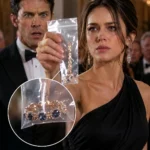
The pearls came back in a velvet box.
So did the bracelet.
So did the diamond earrings.
I did not wear them immediately.
For a while, I could not look at them without seeing Madison’s throat, Cole’s hand at her back, my mother’s chair with a purse on it.
Then one evening in October, Uncle Graham invited me to dinner at The Clarke Cooke House. Newport was turning gold at the edges. The air smelled like salt, woodsmoke, and expensive sweaters.
I wore the pearls.
Not because they were mine.
Because I was.
At dinner, Graham raised a glass of red wine.
“To Eleanor,” he said.
I touched my pearls.
“To Eleanor.”
He studied me across the candlelight.
“You’re lighter.”
“Am I?”
“I don’t feel lighter.”
“That comes later.”
I looked toward the window. Outside, couples walked along the street beneath amber lamps. A young woman laughed into the collar of a man’s coat. For a second, I felt the old ache—not for Cole, but for the innocence of believing love alone could protect a life.
“Do you think she knew everything?” I asked.
“Your mother?”
Graham smiled faintly.
“No. Eleanor was brilliant, not divine.”
“She seemed divine.”
“She was terrified.”
I turned back.
He nodded.
“She was terrified of leaving you. Terrified you would mistake endurance for loyalty. Terrified you would forgive what should have freed you.”
My eyes burned.
“She should have told me.”
“Yes,” he said gently. “Maybe. But she also knew you. If she had told you too soon, you would have confronted him from the heart.”
I looked down.
He was right.
I would have cried. Demanded answers. Asked Cole how he could do this to us. Given him time to lie better.
“And instead?” I asked.
“Instead, you confronted him from the record.”
I laughed softly.
“That sounds colder.”
“It is.”
“Is that bad?”
Graham leaned back.
“No. Winter kills things too weak to survive honestly.”
After dinner, I walked home alone along Bellevue Avenue.
I had security nearby, though I no longer felt hunted. The great houses rose behind hedges and iron gates, lit from within like secrets. Somewhere beyond them, the ocean continued its eternal argument with the rocks.
At Whitmore House, Mrs. Bell had left lights on in the hall.
I went into the blue drawing room.
The chairs were gone now, returned to their usual places. The mahogany table had been polished. The fire was unlit. Without people, without lawyers, without betrayal trying to dress itself as family, the room looked almost innocent.
I stood where Madison had stood.
Then where Cole had stood.
Then I sat in my chair.
Not my mother’s.
Mine.
On the table beside me lay a stack of documents for the Eleanor Hart Legal Defense Fund, a new initiative providing emergency legal support for women facing coercive control, financial abuse, medical manipulation, and high-asset divorce intimidation.
Claire had helped design it.
Naomi had built the security protocols.
Graham had joined the advisory board under protest and then rewritten half the governance documents because he could not help himself.
The first grant had gone to a woman in Connecticut whose husband had hidden her passport and called her unstable in custody filings.
The second to a nurse in Atlanta whose fiancé opened credit cards in her name.
The third to a mother in Dallas whose in-laws tried to use private investigators to scare her into silence.
My mother’s money was becoming doors.
Not for everyone. Not enough. Never enough.
But some.
That was the part no viral clip captured.
The internet loved the chair. The mistress. The pearls. The courtroom. The line about clean air. The word discovery. The fantasy of a woman humiliated in public and avenged in silk.
But the real ending was quieter.
It was a woman sleeping through the night again.
It was opening windows.
It was eating breakfast without nausea.
It was signing your own name and feeling no hand close over yours.
It was learning that silence could be a grave or a garden, depending on what you planted there.
In November, I visited my mother’s grave.
The cemetery overlooked the water, because of course Eleanor had selected a view. Her headstone was simple white marble.
Eleanor Whitmore Hart
Beloved Mother
Keeper of Rooms
I had argued against that last line when Graham suggested it.
“She would have preferred something dignified,” I said.
Graham had replied, “She locked a dead man out of a trust in 1998 because he insulted a waitress. Let’s not pretend she lacked personality.”
So Keeper of Rooms stayed.
I brought white gardenias and one small orchid in a clay pot.
The grass was damp beneath my heels.
For a long time, I said nothing.
Then I told her everything she already knew and everything she had missed.
I told her about Cole signing.
I told her about Madison’s daughter.
I told her about the legal fund.
I told her I was angry she had left me letters instead of answers.
I told her I understood.
Both were true.
The wind moved softly off the ocean.
“I wore the pearls,” I said.
A gull cried somewhere beyond the hill.
“I didn’t break.”
The words surprised me.
I had not known that was what I came to say.
Not because I was strong every day. I wasn’t.
There were mornings I still woke reaching for an old life before remembering I had survived it. There were nights I hated every beautiful thing Cole had touched because beauty had not warned me. There were moments I missed being loved by someone who had never existed.
But I did not break.
My mother had left me money, yes.
Property. Shares. Art. Trusteeship. Power.
But beneath all of that, hidden in clauses and envelopes and impossible timing, she left me something far more dangerous.
She left me the knowledge that humiliation is not the end of a woman.
Sometimes it is the lighting cue.
Sometimes it is the moment the room goes quiet enough for the truth to enter.
Sometimes the woman they expect to cry simply sits down in the chair that was always hers and lets the law speak first.
When I returned to Whitmore House, the sun was setting over Newport in sheets of rose gold. The windows caught the light until the whole house looked briefly aflame.
Mrs. Bell met me in the hall.
“There’s a delivery for you,” she said.
In the drawing room sat a single cardboard box.
No note.
Inside were the last of my belongings from Cole’s apartment: books, a silk scarf, a framed photograph from our honeymoon in Santa Barbara, and my wedding ring.
He must have found it after I left it in the safe.
I picked it up.
The diamond flashed coldly.
For nine years, I had thought that ring meant I had been chosen.
Now it looked like what it was: a beautiful circle that had once made a cage.
I carried it to the winter garden.
The orchids watched, extravagant and silent.
For a moment, I considered throwing the ring into the ocean. It would have made a better video. A cleaner symbol. The kind strangers would replay with captions about healing and revenge and divine feminine energy.
Instead, I placed it in a small evidence box and wrote the date on the label.
Not everything needs to burn.
Some things need to be remembered accurately.
That night, I hosted dinner in the blue drawing room.
Not a gala. Not an event. Just twelve women from the first round of the legal fund, plus Claire, Naomi, Mrs. Bell, Aunt Patricia, and one very uncomfortable Uncle Graham who was assigned the seat nearest the door in case he needed to frighten anyone for sport.
There was laughter.
Real laughter.
The kind that arrives late to rooms where pain has overstayed.
We ate roasted salmon, winter greens, potatoes with rosemary, and the chocolate cake my mother used to pretend she did not like. We drank champagne from the good crystal because saving beautiful things for later is how joy gets lonely.
At some point, a woman named Marisol stood and raised her glass.
“To Mrs. Hart,” she said, though she had never met my mother. “For building a room where women get believed.”
My throat tightened.
Everyone drank.
After dessert, when the candles had burned low and the windows reflected us back at ourselves, I looked around the room.
There were no mistresses here.
No husbands measuring inheritance.
No men whispering that grief made women unreliable.
Just women in silk, wool, denim, borrowed dresses, court shoes, pearl earrings, tired eyes, brave lipstick, soft sweaters, and second chances.
Family, I realized, was not always blood.
Sometimes family was whoever helped you move the purse off your chair.
Later, after everyone left, I stood alone in the blue drawing room once more.
The house had changed.
Or maybe I had.
The room no longer felt like the place where my marriage ended. It felt like the place where my mother kept her last promise.
On the mantel, I had placed a photograph of Eleanor taken before she became ill. She stood in the winter garden wearing a cream blouse and dark trousers, one hand resting on an orchid stem, eyes bright with that old dangerous intelligence.
I touched the frame.
“You were dramatic,” I whispered.
The house settled around me, wood and stone and memory.
Somewhere in the distance, the ocean broke against the cliffs.
My phone lit up with a notification from the foundation account. A woman had sent a message.
I watched your video, it said. I called a lawyer today.
I read it twice.
Then I looked at my mother’s photograph and smiled.
The world would remember the scandal because scandal is easy.
It would remember Madison in white, Cole on the stage, the courtroom, the will, the sentence that sliced through an empire.
But I would remember the chair.
The quiet before the reading.
My uncle’s hand lifting the purse.
The attorney opening the will.
My mother’s voice returning in ink.
And the exact moment I understood that some women do not need to shout to be heard.
Some women build rooms, write clauses, hide keys, fund lawyers, preserve evidence, and leave their daughters instructions sharp enough to cut through betrayal.
Madison had wanted a place beside my husband.
Cole had wanted my inheritance.
Preston had wanted control.
They all mistook proximity for power.
My mother knew better.
Power was not who sat closest to the man.
Power was who owned the deed, held the proof, funded the case, and decided when the doors opened.
So yes, his mistress tried to take my seat at my own mother’s will reading.
She placed her purse on my chair and said she should be near family.
But family was never the chair beside Cole Harrington.
Family was the woman who saw the betrayal coming and turned her love into law.
She wanted the seat. My mother owned the room.