He Put a Paternity Test on My Hospital Tray. Then I Noticed the Lab Was Registered to His Mother’s Charity.
My husband rejected our newborn daughter in a private Boston hospital suite with his mistress holding his hand.
His mother placed the paternity report on my tray like it was a verdict, and the baby was still sleeping against my chest.
Grant Whitmore did not look at our daughter.
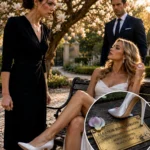
Sloane Hart smiled from the doorway in a cream cashmere coat that cost more than my first car.
I read the lab name once.
Then I read the billing address.
Something inside me went so cold it stopped hurting.
I looked up at my mother-in-law and asked one quiet question.
“Why does the lab’s billing address match your charity office?”
Part 1 — The Report on the Silver Tray
The room went silent in the way expensive rooms do when the truth enters without permission.
There were no beeping monitors screaming for me.
No nurse rushing in.
No dramatic storm outside the window.
Just the soft hum of heated floors, white roses in crystal vases, and my newborn daughter breathing like she trusted the world.
Grant’s jaw tightened.
Carolina Whitmore’s manicured fingers stayed on the edge of the hospital tray.
Sloane’s smile faded by one perfect millimeter.
That was how I knew I had hit bone.
“What did you say?” Carolina asked.
Her voice was silk over a knife.
I shifted my daughter higher against my chest.
Her name was Lila Josephine Whitmore, though Grant had not signed the birth certificate yet.
Maybe that was the part he thought would break me.
Maybe he thought refusing his name would make her smaller.
It did not.
It only made him look less like a man.
I tapped the corner of the paternity report.
“HarborSure Genetics,” I said.
“Billing department, 219 Commonwealth Avenue, Suite 400.”
I looked at Carolina.
“That is the same address as the Whitmore Children’s Fund.”
Grant finally looked at me.
Not at Lila.
At me.
His eyes were the same gray-blue that had once made me stupid in a Newport church under ten thousand white orchids.
Now they looked like polished stone.
“You gave birth twelve hours ago,” he said.
May you like
“Do not start.”
That almost made me laugh.
I had been cut open, stitched closed, handed a child, and ambushed by my husband’s mistress before breakfast.
But apparently I was the one being dramatic.
Sloane stepped into the room as if she had been invited by God.
She placed one hand on Grant’s arm.
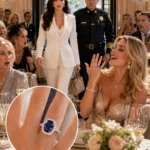
The diamond bracelet on her wrist caught the morning light.
It was mine.
Not legally.
Emotionally.
Grant had bought it for our third anniversary and told me it looked like moonlight on my skin.
Now moonlight belonged to Sloane.
“I know this is painful, Evelyn,” she said.
She said my name like she had practiced it in a mirror.
Soft, wounded, superior.
“But Grant deserves the truth.”
I looked at her.
Sloane Hart was beautiful in the way women become beautiful when they have never had to apologize for taking up space.
She had glossy auburn hair, green eyes, and the serene smugness of someone who believed being chosen made her holy.
I wondered how long she had waited outside my hospital room.
I wondered whether she had heard me cry when Lila took her first breath.
Then I decided wondering was a waste of blood pressure.
“Truth usually comes with a chain of custody,” I said.
Carolina’s eyes sharpened.
Grant exhaled through his nose.
“This is over,” he said.
He took the report from the tray and dropped it beside my water glass.
“The test proves she is not mine.”
Lila made a small sound in her sleep.
Her fist opened against my hospital gown.
My body wanted to protect her so violently that I felt my pulse in my teeth.
But my face stayed calm.
My mother had taught me that.
Never let cruel people know where the wound is.
“Interesting,” I said.
Grant’s expression darkened.
“Interesting?”
“Yes.”
I picked up the report with two fingers.
“The sample type says umbilical cord blood.”
Sloane glanced at Carolina.
That glance lasted less than a second.
I saw it anyway.
I had spent five years married to the Whitmores.
I knew their language.
They lied with pauses.
“This report says the cord blood was collected at 8:14 p.m. last night,” I continued.
Grant said nothing.
“Lila was born at 8:43 p.m.”
The silence changed shape.
Carolina removed her hand from the tray.
Grant’s gaze flicked to the paper.
Sloane’s mouth parted.
Not much.
Enough.
I smiled.
Not warmly.
“Your fake test is twenty-nine minutes older than my baby.”
Grant’s face went red under the skin.
Carolina recovered first because Carolina had spent sixty-three years turning catastrophe into posture.
“You are exhausted,” she said.
“You are medicated.”
“I am observant.”
“You are making this harder than it has to be.”
“No,” I said.
“I think you miscalculated how hard I am allowed to be.”
Grant stepped closer to the bed.
There had been a time when I measured my safety by the sound of his footsteps.
Now each one felt like a door locking.
“You cheated,” he said.
His voice was low.
Almost intimate.
As if this accusation belonged to the two of us and not to the woman standing behind him wearing my bracelet.
“I did not,” I said.
“You humiliated this family.”
I looked around the private suite.
Italian sheets.
Marble bathroom.
White roses.
A bassinet engraved with the Whitmore crest because Carolina insisted on ordering it herself.
“I’m not the one who brought a mistress to the maternity ward.”
Sloane inhaled sharply.
Grant’s eyes flashed.
“Do not call her that.”
I looked at their joined hands.
“What would you prefer?”
Carolina cut in.
“This family has endured enough scandal.”
I almost admired her nerve.
The woman had walked into my room with a forged paternity test and a mistress, and somehow I was the scandal.
She pulled a cream envelope from her Hermès bag.
Of course she did.
Carolina Whitmore never came to war with one weapon.
“This is a notice from Grant’s counsel,” she said.
“Counsel?” I repeated.
Grant looked at the window.
Coward.
Carolina placed the envelope on my tray.
“Under the morality provision in your prenuptial agreement, evidence of infidelity resulting in a child outside the marriage triggers immediate forfeiture of spousal claims.”
There it was.
The blade behind the report.
Not just rejection.
Removal.
They had not come to deny Lila.
They had come to erase us.
The Whitmores did not end marriages.
They acquired the exits.
I looked down at my daughter.
Her eyelashes were impossibly fine.
Her mouth moved as if she was dreaming of milk and light.
She had Grant’s chin.
My mother’s nose.
My courage, I hoped.
I pressed my lips to her forehead.
Then I looked at Carolina.
“Does your attorney know the document you’re relying on was generated by a lab with your charity’s billing address and a timestamp from before the child existed?”
Carolina smiled.
It was not friendly.
“I would be careful, Evelyn.”
“I am being careful.”
“No,” she said.
“You are being emotional.”
That word.
Emotional.
The favorite leash of powerful people when a woman refuses to kneel.
I leaned back against the pillows.
My incision burned.
My milk had not come in yet.
My marriage was bleeding out beside a hospital bassinet.
Still, my voice stayed even.
“Get out.”
Grant stared at me.
“This is my daughter’s room,” I said.
“Not yours.”
“She is not my daughter.”
The words landed on Lila before they landed on me.
For one second, something in my chest cracked so loudly I thought everyone heard it.
Then it sealed.
Not healed.
Sealed.
There is a difference.
Grant Whitmore had just given me the cleanest kind of grief.
The kind that leaves no room for confusion.
I reached for the nurse call button.
Carolina’s eyes narrowed.
“What are you doing?”
“Calling security.”
Grant laughed once.
It was ugly.
“You would have security remove me from the hospital wing my family funded?”
I pressed the button.
“And if the plaque downstairs has your name on it, they’ll know exactly what to spell in the incident report.”
Sloane moved closer to Grant.
For the first time, she looked uncertain.
Good.
A nurse entered twenty seconds later.
Her name was Dana, and she had the calm face of someone who had seen rich families turn childbirth into a crime scene before.
“Mrs. Whitmore?” she asked.
“These three are leaving,” I said.
Carolina lifted her chin.
“You cannot be serious.”
Dana looked at the report on my tray.
Then at Sloane’s hand on my husband’s arm.
Then at the newborn asleep against my chest.
Her expression cooled by several degrees.
“Sir,” she said to Grant.
“The patient has requested privacy.”
Grant did not move.
“You are making a mistake,” he said to me.
“I made one five years ago in a cathedral in Newport.”
His mouth tightened.
Carolina picked up her bag.
Sloane lingered just long enough to make sure I saw her touch Grant’s back.
It was meant to hurt.
It did.
But pain is not the same as weakness.
As they reached the door, I called after them.
“Leave the report.”
Grant turned.
“Why?”
I held his gaze.
“Because fake things still make real evidence.”
Part 2 — The Marriage Built Like a Mansion
I met Grant Whitmore at a charity auction in Boston where everyone pretended generosity was not another form of theater.
He was thirty-one, handsome, educated, and bored in a navy tuxedo.
I was twenty-eight, a litigation consultant who had built a career translating rich people’s chaos into documents lawyers could understand.
That night, I was there because my boss had donated a weekend in Nantucket and needed someone sober enough to remember the receipts.
Grant spilled champagne on my shoes.
I told him the apology was more convincing than the accident.
He laughed.
That was the first trap.
Grant’s laugh made people believe he was warmer than he was.
For eight months, he was sunlight.
He brought coffee to my office during trial prep.