My husband used my vineyard futures account to buy rare wine for his mistress’s engagement dinner.
Not a discreet bottle opened in a shadowed suite.
Not a guilty case delivered through a private entrance.
Sebastian Vale ordered one hundred and twenty-eight cases from the allocation I had spent eleven years building—Bordeaux older than most marriages, Burgundy sold only by invitation, and the final twenty-four cases of Blackthorn Nocturne, the unreleased vintage my grandmother had blended six weeks before she died.
The authorization was worth $2.4 million.
He signed my name.
Then he invited me to the party.
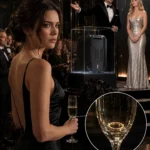
By the time I entered the ballroom of Aurelian House in Manhattan, six hundred white orchids floated above the tables like beautiful ghosts. Antique crystal chandeliers burned against a ceiling painted with gold-leaf constellations. A string quartet played beneath a staircase wrapped in ivory roses. Every woman in the room wore enough diamonds to purchase a small town, and every man looked as though he had been trained from birth never to react when another person bled.
Sebastian stood beneath the largest chandelier in a midnight tuxedo.
Beside him was Sloane Ashford.
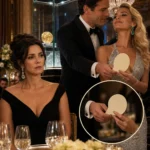
My husband’s mistress wore my grandmother’s emerald necklace and rested one manicured hand over the place where Sebastian had spent months telling investors their future would begin.
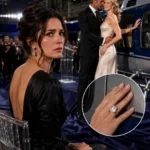
On her ring finger sat a twelve-carat diamond.
My diamond.
Purchased through a shell company.
Paid for with money Sebastian had quietly removed from the employee retirement reserve of Vale House Hospitality.
The newspapers had called the evening an engagement celebration.
Technically, Sebastian and I were still married.
But only I seemed to find that detail important.
Sloane watched me cross the ballroom with the serene cruelty of a woman who believed the outcome had already been decided. She was twenty-nine, famous for turning private pain into public content, and dressed in silver silk that moved around her like poured mercury.
A waiter approached her with a bottle of 1947 Château Bellamont.
One of mine.
Sebastian had taken it from a secured collection in Napa, transported it across state lines under a forged release, and placed it in her hand as if love were simply another asset he could steal.
The sommelier poured.
Sloane lifted the glass.
The wine inside it was worth more than the first car I had ever owned.
She swirled it slowly, breathed in the scent, and smiled at me over the rim.
“Vivienne,” she said loudly enough for the nearest tables to hear, “can you taste defeat?”
Conversation softened.
Phones appeared discreetly beneath napkins.
Sebastian did not stop her.
He placed his hand at the small of her back and looked at me with the expression he used when dismissing an employee he had already replaced.
“The cellar belongs to the future,” he said.
May you like
A few people laughed.
Not because it was funny.
Because powerful people often mistake cruelty for confidence, and everyone in that ballroom still believed Sebastian was powerful.
I looked at the glass in Sloane’s hand.
Then at the bottle.
Then at the man who had confused my silence with surrender.
“I agree,” I said. “The cellar does belong to the future.”
Sebastian’s smile sharpened.
He thought I had accepted my humiliation.
He had always been most dangerous when he felt certain.
What he did not know was that, three hours earlier, my broker had completed his review of the futures contract.
What Sloane did not know was that the anonymous investment company financing her plan to betray Sebastian belonged to me.
What neither of them knew was that Aurelian House—the hotel, the ballroom, the wine cellar beneath us, and every crystal glass raised in celebration—had changed ownership at four seventeen that afternoon.
I owned it.
I owned the debt behind Sebastian’s company.
I owned the voting rights he had promised Sloane.
And because he had transferred my wine using a forged authorization, he had triggered the clause that allowed me to take everything else.
Behind me, the ballroom doors opened.
My attorney entered first.
The federal investigators came after him.
And the quartet stopped playing.
## CHAPTER ONE
## THE MARRIAGE HE SERVED LIKE POISON
Sixteen weeks earlier, I had still believed betrayal would make a sound.
A midnight phone call.
A lipstick stain.
A stranger’s perfume lingering on a collar.
A confession delivered with trembling hands.
Instead, the end of my marriage arrived as a notification from a wine brokerage app while I stood barefoot in my kitchen, cutting a blood orange into perfect slices.
**TRANSFER AUTHORIZED: BLACKTHORN FUTURES ACCOUNT**
For several seconds, I only stared.
The kitchen around me was pale marble, brushed brass, and filtered California sunlight. Our house sat above the vineyards in St. Helena, its glass walls facing rows of vines that curved across the hills like green handwriting. Architectural Digest had photographed the kitchen twice. Sebastian called it the heart of our home whenever reporters visited.
He had not eaten breakfast there with me in almost a year.
I opened the notification.
Twenty-four cases of Blackthorn Nocturne.
Forty-eight cases of Château Bellamont.
Twelve cases of Domaine Lenoir.
Eight imperial bottles of 1982 Roseraie.
Thirty-six additional cases purchased through my secured futures credit line.
Destination: Aurelian House, New York City.
Event code: **ASHFORD-VALE ENGAGEMENT DINNER**.
At first, the words would not arrange themselves into meaning.
Ashford.
Vale.
Engagement.
My surname attached to another woman’s.
I read the transfer again.
Then a third time.
The knife remained in my hand. Juice from the orange ran across the marble like diluted blood.
Sebastian had told me he was in Boston negotiating a hospitality acquisition.
He had kissed my cheek the night before and said, “Don’t wait up Thursday. The financing team may need me all weekend.”
His wedding ring had touched my skin.
I set down the knife.
My pulse was steady.
That frightened me more than panic would have.
I called the brokerage.
“Calder and Finch Private Wine,” a man answered. “Mateo Ellis speaking.”
“My name is Vivienne Laurent Vale. I received a notice regarding my futures account.”
A pause.
Not long.
Just long enough.
“Mrs. Vale,” Mateo said carefully, “I was told you had authorized the transfer.”
“I didn’t.”
Another pause.
This one heavier.
“May I verify the security phrase on the account?”
“Winter survives underground.”
I heard keys moving.
“Thank you. There is a signed release attached to the order.”
“Send it to me.”
“I’m afraid the release was submitted through an authorized representative.”
“I am the account holder.”
“Yes, ma’am.”
“Then send it.”
He inhaled.
“There may be legal complications.”
“There are already legal complications, Mr. Ellis. I’m asking whether you would prefer to discover them with me or through a subpoena.”
The document appeared in my inbox twelve seconds later.
I opened it.
There was my name.
My address.
My account number.
My signature.
Except I had not signed it.
The forgery was excellent.
Sebastian had watched me sign enough documents to understand the rhythm of my hand. He knew where I pressed harder, how the V in Vivienne leaned slightly forward, how I crossed the final letter of Vale with a line that rose instead of falling.
He had copied even the imperfections.
Attached to the release was a limited power of attorney.
Also forged.
I read every page while the morning light moved across the floor.
The transfer had been requested by Vale House Hospitality through the office of its chief executive officer.
Sebastian.
The order included internal notes.
**Priority client celebration. Press exposure expected. Future brand alignment between Vale House and Ashford Media.**
There was even a list of featured guests.
Investors.
Actors.
Editors.
Politicians.
People who had sat at my table, stayed in my home, praised my wine, and thanked me for introducing them to Sebastian when he was still a handsome hotel manager with one borrowed suit and a talent for making wealthy people feel understood.
Near the bottom of the list, under “family attendance,” was my name.
**Vivienne Vale—attendance uncertain. Seat near service access if present.**
My marriage had been reduced to a seating instruction.
I closed the document.
“Mrs. Vale?” Mateo asked through the phone.
“I’m here.”
“Would you like me to freeze the account?”
Every wounded part of me screamed yes.
Freeze it.
Expose him.
Call him.
Break every bottle before he could pour one drop for her.
But anger is expensive when spent too early.
My grandmother taught me that.
She had run Blackthorn Estate through drought, wildfire, recession, and three separate men who tried to take it from her. She never raised her voice in negotiations.
“Noise,” she once told me, “is what powerless people use when they want powerful people to reveal themselves.”
So I looked through the glass wall at the vines she had left me.
And I made my first decision as a woman whose marriage was ending.
“No,” I said.
Mateo sounded surprised. “You don’t want the transfer stopped?”
“Not yet.”
“Mrs. Vale, if these wines are released—”
“They won’t be.”
“The shipping request has already been approved.”
“By whom?”
“Your husband’s office.”
“That wasn’t my question.”
Silence.
Then Mateo said, “The release department accepted the authorization.”
“Has anyone reviewed the original futures contract?”
“I believe our standard—”
“Has anyone read mine?”
Another silence.
“No,” he admitted.
“Then don’t freeze the account. Don’t contact Sebastian. Don’t contact anyone at Vale House. Preserve every document, email, voice authorization, access record, and security log connected to this transfer.”
“I will need approval from our general counsel.”
“Get it.”
“And the wine?”
“Let him believe it’s coming.”
I ended the call.
Only then did I allow myself to sit.
Sebastian and I had been married for nine years.
I met him when I was twenty-four at a harvest dinner in Sonoma. He had been charming without seeming ambitious, attentive without seeming calculating. He asked questions about fermentation and listened to the answers. Most men asked about the vineyard’s value.
Sebastian asked what the cellar smelled like in winter.
I loved him for that.
Or perhaps I loved the man I imagined could ask such a question honestly.
When my grandmother became ill, Sebastian drove her to appointments. He learned her medication schedule. He sat beside me through chemotherapy consultations and held my hand beneath conference tables when the doctors explained there would be no recovery.
After she died, I stopped sleeping.
Sebastian handled everything.
The funeral.
The staff.
The wine distributors.
The endless paperwork required to preserve a business after the woman who built it was gone.
He told me to rest.
Then he slowly removed my name from every room.
At first, I was grateful.
Then embarrassed by my gratitude.
By the time I understood what he had done, Vale House Hospitality had expanded from three boutique hotels to twenty-two. Blackthorn wine was served in every presidential suite. Sebastian appeared on magazine covers beside headlines about intuition, legacy, and visionary leadership.
I was mentioned in small print.
**His wife, Vivienne, comes from a winemaking family.**
As though Blackthorn were an interesting hobby.
As though the first Vale House had not been financed by selling part of my grandmother’s private cellar.
As though the introductions, investment dinners, supplier relationships, and reputation had appeared around him like divine weather.
I had helped build his empire.
Then I had watched him edit me out of its history.
Still, I had stayed.
Love can survive neglect longer than dignity should.
My phone lit up.
A message from Sebastian.
**Board dinner tonight. Don’t wait up.**
I stared at the words.
Then I typed:
**Of course. Good luck.**
The answer came immediately.
**That’s my girl.**
Something inside me went quiet.
Not broken.
Quiet.
There is a difference.
Broken things beg to be repaired.
Quiet things begin planning.
I spent the afternoon reviewing financial records.
Sebastian believed I had stopped paying attention years ago. He believed the wine, the estate, and the charitable foundation occupied all my time. He never noticed that every monthly report from Vale House still arrived in a private archive my grandmother’s attorneys had established before our wedding.
Most were ordinary.
Some were not.
Consulting fees paid to an LLC called Silver Briar.
Luxury travel booked under marketing expenses.
Jewelry purchases coded as influencer partnerships.
A Manhattan penthouse leased through a subsidiary that officially existed to acquire restaurant equipment.
The resident listed on the insurance document was Sloane Ashford.
I knew her face.
Everyone did.
She had built a lifestyle brand around expensive restraint—cream-colored rooms, whispered videos, antique jewelry, captions about protecting feminine energy. She came from an old New York family whose money had thinned but whose guest lists remained valuable.
Sebastian had hired her as a brand consultant eighteen months earlier.
I remembered meeting her at the opening of Vale House Charleston.
She had embraced me in front of photographers.
“Your marriage is iconic,” she whispered.
Her hand had lingered on my arm.
I had mistaken possession for admiration.
At five thirty, I opened a hidden drawer in my grandmother’s desk.
Inside was a card with one name.
**Adrian Knox.**
I had not spoken to Adrian in thirteen years.
He grew up six miles from Blackthorn, the son of a vineyard foreman and a public defender. We spent our childhood racing bicycles between rows of vines and stealing apricots from my grandmother’s kitchen. He was the first boy who kissed me and the first man who left without asking me to follow.
At twenty-five, Adrian moved to Manhattan.
At thirty, he founded Knox Calder, a litigation firm known for dismantling private equity fraud, hostile takeovers, and the reputations of men who mistook wealth for immunity.
Business magazines called him merciless.
Photographs showed a tall man in dark suits, his face composed, his black hair touched with early silver at the temples.
My grandmother had trusted him.
That mattered more than any magazine.
I called the number.
He answered on the second ring.
“Knox.”
His voice was lower than I remembered.
“This is Vivienne Laurent.”
Not confusion.
Recognition.
“Vivienne.”
No one said my name that way anymore.
Not like it had weight.
“I need a lawyer,” I said.
“Then you should hire one.”
“I need a lawyer who doesn’t like my husband.”
“Most competent lawyers don’t.”
Despite everything, a breath of laughter escaped me.
Adrian’s voice softened by half a degree.
“What did Sebastian do?”
“He forged my signature, stole from my futures account, and bought wine for his mistress’s engagement dinner.”
“To whom is she engaged?”
“My husband.”
A longer silence.
“When?”
“Sixteen weeks.”
“Does he know you know?”
“No.”
“Good.”
The word was cold enough to calm me.
“Can you come to California?” I asked.
“I’m already at the airport.”
I stood.
“What?”
“Your grandmother retained me six years ago.”
The room seemed to tilt.
“For what?”
“To protect you when Sebastian eventually became exactly who she believed he was.”
I gripped the edge of the desk.
“My grandmother knew?”
“She suspected.”
“Why didn’t you tell me?”
“Because she made me promise not to interfere unless you called.”
Pain moved through me with an old, familiar shape.
Even dead, my grandmother had been waiting for me to choose myself.
“What happens now?” I whispered.
Adrian’s reply came without hesitation.
“Now you stop being his wife.”
“And become his consequence.”
Adrian arrived at Blackthorn after midnight.
I waited in the library with the forged transfer documents arranged across the table.
The house was dark except for the fire.
When the front door opened, I heard the housekeeper admit him. Footsteps crossed the limestone hall.
Then Adrian appeared in the doorway.
Time had refined him into something more dangerous than youth.
He wore a charcoal overcoat over a black suit, no tie, rain darkening his shoulders. His face had become sharper, his stillness more controlled. The boy I remembered used to smile before speaking.
The man said nothing until I stood.
His gaze moved over me carefully.
Not admiring.
Assessing.
“You look tired,” he said.
“You look expensive.”
“I bill accordingly.”
I should not have smiled.
I did.
For one brief second, we were nineteen again, barefoot beside the irrigation pond, daring each other to jump.
Then his eyes fell to the documents.
He removed his coat.
“Show me everything.”
We worked until dawn.
Adrian read in silence, making notes with a fountain pen. He asked exact questions.
Who had access to my signature?
Which company employees knew about the futures account?
Had I ever granted Sebastian limited authority?
When had I last updated the trust?
Did I share passwords?
Had I discussed divorce?
Did Sebastian know the complete ownership structure of Blackthorn?
Adrian looked up.
“Why not?”
“Because my grandmother never trusted him.”
“And you married him anyway.”
“Yes.”
He did not soften the truth.
That was one of the things I had once loved about him.
Perhaps one of the things that had frightened me.
I opened the oldest file.
“Blackthorn is owned through the Larkspur Heritage Trust. My grandmother remained trustee until her death. I became successor trustee.”
“Beneficiaries?”
“Me. Any future children. The Blackthorn workers’ foundation.”
“Does Sebastian have a beneficial interest?”
“Management authority?”
“Spousal access?”
“Did he sign a prenuptial agreement acknowledging that?”
Adrian sat back.
“Then he didn’t steal marital property.”
“What did he steal?”
“Trust assets.”
The fire shifted behind him.
“Is that better?” I asked.
“For us?” Adrian’s expression did not change. “Much.”
He reviewed the power of attorney.
“This is not merely forged,” he said. “It was notarized.”
“I saw.”
“Do you recognize the notary?”
“Daniel Cross. Sebastian’s executive assistant.”
“Then either Mr. Cross participated, or his seal was misused.”
Adrian placed the paper beside the transfer request.
“Wire fraud. Forgery. Breach of fiduciary duty. Possible conspiracy. Potential theft from an employee benefit reserve, depending on how he financed the ring and other purchases.”
“You found that already?”
“You found it. I read your notes.”
He turned another page.
“This Silver Briar LLC received eleven million dollars from Vale House in eighteen months.”
“Consulting fees.”
“Did it provide consulting?”
“It rented Sloane a penthouse.”
“Anything else?”
“Cars. Jewelry. Travel.”
“And the engagement dinner.”
I nodded.
Adrian’s eyes became unreadable.
“Vivienne, I need you to understand something.”
“I understand he’s having an affair.”
“This is larger than an affair.”
He slid a financial statement toward me.
“Sebastian has been moving company assets into entities linked to Sloane. He’s not only leaving you. He is preparing to leave Vale House.”
My stomach tightened.
“With what?”
“Everything liquid enough to carry.”
I looked toward the window.
Dawn had begun silvering the vines.
“He built that company.”
“You financed it.”
“He made it successful.”
“You made it possible.”
“That isn’t the same thing.”
“No,” Adrian said. “Possible is more valuable.”
I turned back to him.
“What do we do?”