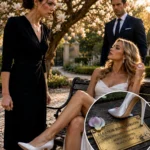
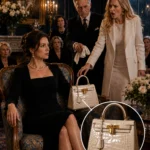
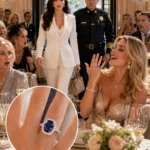
PART 2 — THE WOMAN HE MISTOOK FOR A WIFE
I met Graham Caldwell at a hospital fundraiser in Boston, where he was charming donors for Caldwell Health Systems and I was hiding from a hedge fund manager who believed divorce made him interesting.
Graham found me near the emergency stairwell holding a glass of champagne I had no intention of drinking.
“You look like you’re planning an escape,” he said.
“I am,” I replied.
He smiled.
“Need a driver?”
I should have said no.
But he was warm then.
Or he played warmth so well that it took me years to tell the difference.
He knew how to listen with his whole face.
He knew when to speak softly.
He knew the names of nurses, bartenders, trustees, and hotel doormen.
He remembered my coffee order after one date and my mother’s foundation after two.
By the third month, he was walking with me through construction sites for women’s shelters, stepping carefully over plywood in Italian loafers, saying things like “This matters” and “You’re doing real work.”
My father was dead by then.
My mother was ill.
My sister lived in California and treated New York like a toxic ex.
I was thirty-one, managing the Hart Trust, and tired of being admired by men who wanted access to rooms I had inherited.
Graham seemed different because he never asked for the key.
He simply stood beside the door until I opened it.
We married in Newport under a white tent on my family’s lawn.
The Atlantic was gray that morning.
My mother wore navy silk and pearls.
Graham cried when I walked down the aisle.
Later, I learned Graham could cry beautifully when the audience was right.
Our marriage did not break all at once.
It thinned.
First came the late meetings.
Then the locked phone.
Then the new trainer, the new cologne, the private jet trips that somehow no longer needed me.
Then the way he began using my name in public and avoiding it at home.
“Vivienne worries too much.”
“Vivienne doesn’t understand expansion.”
“Vivienne is emotional about the foundation.”
He said emotional the way a man says unstable when he wants witnesses.
The first mistress was not Sienna.
That surprises people.
It did not surprise my lawyer.
Men rarely begin ruining themselves with the woman who finishes them.
There was a publicist in Dallas.
A healthcare consultant in Denver.
A widow from Palm Beach who donated five million dollars to one of Graham’s hospital projects after he spent a weekend on her yacht.
I knew more than he imagined.
I said less than he feared.
Because the Hart family did not build its wealth by reacting to insults.
We documented them.
The prenup had been my mother’s wedding gift.
Not jewelry.
Not a townhouse.
A prenup.
She was lying in a hospital bed at NewYork-Presbyterian when she made me sign the final draft.
Her hands were thin by then, but her eyes were still sharp.
“Romance is wonderful,” she said.
“Paper is better.”
I laughed because I thought she was being dramatic.
She tapped the document with one pale finger.
“Someday, someone will ask you to prove your own life to them.”
She died three months after my wedding.
Graham stood beside me at the funeral and held my hand in front of the cameras.
That night, he asked if I wanted to postpone the board vote that would grant him advisory control over Caldwell Health’s charitable arm.
I said yes to the vote.
I said no to grief.
That was my first mistake.
My second was believing gratitude could become loyalty.
For years, Graham used my trust to polish his empire.
He could not touch the principal.
He could not sell the properties.
He could not remove me as chair.
But he could stand near the photographs.
He could appear in newsletters.
He could speak at groundbreakings and cut ribbons.
He could convince people that Caldwell money and Hart money were braided together.
They were not.
They were adjacent.
There is a difference.
By the time Sienna appeared, I had already stopped asking where Graham had been.
Not because I did not care.
Because I had learned that men who lie do not give answers.
They give rehearsals.
Sienna Vale was twenty-seven, from Nashville, or Atlanta, depending on which interview she gave.
She had a lifestyle page, a degree she never finished, and a face made for phone screens.
She met Graham at a charity tennis weekend in Palm Beach hosted by a billionaire who collected hospitals the way other men collected watches.
In photographs, Sienna looked delicate.
In person, she had the focus of a lit match.
She knew exactly where the cameras were.
She knew which women mattered.
She knew Graham’s weaknesses before Graham admitted them to himself.
He liked being admired.
He liked being needed.
He liked women who looked at him as if he had rescued them from weather.
I had stopped looking at him that way around year four.
That was apparently unforgivable.
The first photo arrived in June.
Graham and Sienna leaving a private supper club in Miami.
His hand at her back.
Her face tilted toward him.
His wedding ring visible.
The second photo came in August.
Sienna in Aspen, wearing my cashmere coat.
Not similar.
Mine.
A camel Loro Piana wrap coat with a repaired seam inside the left cuff.
I had left it in Graham’s townhouse after a board retreat.
She posted it with the caption, “Borrowed warmth feels better.”
I remember staring at that caption in my office, the city burning gold beyond the windows, and feeling nothing for ten full seconds.
Then I laughed.
Not because it was funny.
Because grief had finally reached absurdity.
By September, she was pregnant.
By October, she was wearing his grandmother’s bracelet.
By November, she wanted my seat.
But she did not know about the envelopes.
My mother had taught me never to confront a powerful man without evidence already in three separate places.
One in the safe.
One with counsel.
One where he would never think to look.
In my case, that was the chapel room of the Lenora Hart House, behind the framed architectural rendering Graham had praised on camera two weeks earlier.
The first envelope held photographs.
The second held bank transfers.
The third held a recording from the Whitmore Hotel’s private dining room.
Graham had met Sienna there six nights before the dinner.
He did not know the hotel belonged, through three holding companies, to the Hart Trust.
He also did not know that the Caldwell family had once sued my grandfather in 1989 and lost because they underestimated the reach of a quiet woman with receipts.
That woman was my grandmother.
I inherited her lawyers.
The recording was not scandalous in the way tabloids prefer.
There was no moaning.
No confession of love.
Just strategy.
Graham’s voice, low and practical.
“Once the baby is recognized publicly, Vivienne won’t fight it.”
Sienna’s voice, pleased and breathy.
“And the building?”
“We pressure the board.”
“But the trust is hers.”
“Only technically.”
I played that sentence seven times in my lawyer’s office.
Then I stopped crying.
Sienna asked, “Can you really get it named for the baby?”
Graham laughed.
“Public sentiment is powerful.”
Sienna said, “What about the DNA issue?”
There was a pause.
Then Graham said, “We’ll handle it after.”
My lawyer, Mara Levin, stopped the recording there and looked at me over her glasses.
Mara was sixty-two, terrifying, and carried a handbag that cost more than most people’s cars.
She had represented my mother during the final years of my parents’ marriage.
She had seen women enter her office broken and leave with keys.
“Vivienne,” she said.
“Does he know you already requested testing?”
I stared at the paused recording.
“No.”
“Good.”
There are moments in a woman’s life when rage becomes architecture.
It stops being fire.
It becomes steel.
That week, I did not scream.
I did not call Graham.
I did not confront Sienna.
I did not leak the photos.
I went to fittings.
I approved catering.
I signed the final naming rights agreement.
I invited the press.
I moved sixty-four percent of Caldwell Health’s charitable partnership assets out of Graham’s advisory reach and into a restricted Hart Foundation program he had no authority to touch.
I changed the locks at the townhouse.
I changed the passcodes at the Newport house.
I changed the beneficiary designation on everything that had once contained his name and mine in the same sentence.
Then I called a lab in Connecticut.
Because the first rule of humiliation is simple.
Never interrupt your enemy while they are walking toward a microphone.
PART 3 — THE CONTRACT HE NEVER READ
The donor contract was eighty-seven pages long.
Graham signed it on page eighty-eight with a Montblanc pen and a bored smile.
He signed beside me in my office while Sienna was still pretending to be a yoga retreat friend and Patricia Caldwell was still inviting me to tea as if she did not already know.
“You lawyers love trees,” Graham joked, flipping through the pages.
“You should read it,” I said.
He kissed my temple.
“I trust you.”
That was another lie men tell when what they mean is, I trust that you love me too much to punish me.
The contract named the Hart Family Trust as sole naming donor.
It named me as chair and final approval authority.
It contained a morals clause that prevented any Caldwell entity or family member from claiming naming influence in the event of public conduct that damaged the mission of the building.
It contained a misrepresentation clause.
It contained a donor-disparagement clause.
It contained an heirship clause because the Caldwells had insisted on a ceremonial family acknowledgment tied to one of the therapy wings.
That clause required verified paternity for any minor child to be described in official foundation materials as a Caldwell heir.
Graham signed every page.
So did Patricia.
So did Graham’s father, Charles Caldwell, who had spent forty years looking like a senator and speaking like a door closing.
The Caldwells cared about names.
They cared about plaques.
They cared about legacy in the way people without tenderness often do.
They believed bloodlines could launder behavior.
They believed a baby could turn adultery into destiny.
They believed I would not expose them because exposure would splash on me too.
They forgot who raised me.
After Sienna’s pregnancy became impossible to hide, Patricia invited me to tea at her Park Avenue apartment.
The apartment looked like a museum that disliked children.
Silver frames.
Pale carpets.
Flowers replaced before they had the indignity of wilting.
Patricia wore winter white and the expression of a woman preparing to forgive herself for hurting someone else.
“Vivienne,” she said, pouring tea neither of us wanted.
“We must think of the family.”
“I am.”
She smiled thinly.
“Graham has made mistakes.”
“Yes.”
“But this child changes things.”
“Does it?”
Her eyes sharpened.
“You were unable to give him one.”
There are sentences that do not make noise when they enter you.