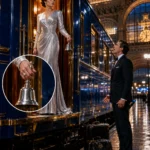
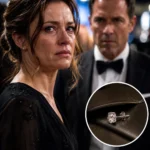
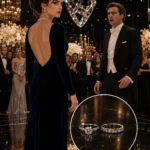
He let his mistress supervise the digitization of my family archive.
Her name was Sloane Hart, and she wore silver gloves while she deleted me from my own history.
Photographs of my first birthday vanished first.
Then my graduation from Wellesley.
Then the portrait of my mother fastening pearls around my throat on the morning of my wedding.
I stood behind Sloane in the climate-controlled archive beneath Vale House and watched my face disappear from one screen after another while my husband, Adrian Mercer, called it necessary modernization.
“Not every image deserves preservation,” he said.
He did not look at me when he said it.
Sloane did.
She smiled at my reflection in the black glass of the monitor, one perfectly manicured finger resting over the Delete key.
I could have screamed.
I could have slapped her.
I could have exposed the photographs on Adrian’s phone, the hotel invoices hidden inside his assistant’s calendar, or the recording of Sloane whispering that my family name would soon belong to her.
Instead, I poured myself a glass of water.
I watched.
And I waited until the archivist opened the protected master backup.
# CHAPTER ONE
## The Woman in Silver Gloves
Vale House had been built to outlive the people who believed they owned it.
It stood on a private bluff above the Hudson River, fifty miles north of Manhattan, all gray stone, black iron, and windows tall enough to hold entire storms. My great-great-grandfather had commissioned the house in 1891 after making a fortune in railroads, shipping, and several enterprises my family later described with the careful phrase *commercially aggressive*.
By the time I inherited it, the house contained three ballrooms, forty-two fireplaces, a chapel no one prayed in, and enough secrets to make every wall feel sentient.
The archive was its heart.
It occupied six underground rooms beneath the east wing, protected by fireproof doors, humidity controls, biometric locks, and the sort of insurance policy that required lawyers to translate. There were oil portraits, private letters, architectural plans, diaries, stock certificates, film reels, jewelry ledgers, and photographs dating back to the first days of commercial photography.
There was also the Vale Collection: thirty-seven paintings, twelve sculptures, and several thousand historical objects owned not by me personally, but by the Vale Cultural Preservation Trust.
Most people did not understand the difference.
Adrian pretended not to.
He had been trying to turn Vale House into an international luxury brand since the second year of our marriage.
May you like
Vale hotels.
Vale fragrances.
Vale private clubs.
Vale-branded crystal decanters priced high enough to make vulgarity look sophisticated.
He called it protecting the legacy.
My grandmother would have called it selling the silver before the guests arrived.
She had died six years earlier, leaving me the house, chairmanship of the family foundation, and a collection of instructions written in a hand so elegant that even her warnings looked like invitations.
One of those instructions concerned the archive.
*Preserve everything,* she had written.
*Especially what embarrasses us.*
Adrian laughed when he read it.
“That,” he said, “is exactly why old families collapse. They confuse sentiment with strategy.”
At the time, I mistook his contempt for ambition.
I was thirty-one when I married him, old enough to recognize arrogance and lonely enough to rename it confidence.
He was brilliant in the way Manhattan rewards. Fast, polished, impossible to embarrass. He could enter a room of billionaires with nothing but a rented tuxedo and leave with three investors, two political favors, and an invitation to a yacht in Saint-Tropez.
He had built Mercer Global from a boutique hospitality firm into a luxury empire valued at nearly two billion dollars.
I had inherited Vale House.
The magazines called us the perfect merger of new money and old blood.
They photographed us beneath chandeliers.
They wrote about my quiet elegance and his relentless vision.
They never wrote that Adrian began correcting me in public six months after our wedding.
They never saw him remove my hand from his arm before cameras arrived because he said I looked clingy.
They did not hear him tell me that I had no instinct for business, despite the fact that the Vale Foundation’s assets had grown by forty percent under my leadership.
Humiliation rarely begins with a slap.
It begins with tiny revisions.
A story retold so that your contribution disappears.
A joke made at your expense.
A dinner where your husband interrupts you three times and then congratulates another woman for making the point you were trying to make.
By the time Sloane Hart entered our marriage, Adrian had already trained the world to see me as decorative.
Sloane was thirty-four, a digital heritage consultant with a degree from Stanford, a following of half a million people, and cheekbones that looked engineered for cruel lighting.
She had built her reputation helping museums “reimagine legacy assets for modern audiences.”
Her website described her as a disruptor.
My grandmother disliked that word.
“Only people who have never built anything,” she once told me, “are impressed by destruction.”
Adrian introduced Sloane at dinner in Manhattan.
We were seated at Le Jardin Noir, a private restaurant above Fifth Avenue where the lighting made everyone look younger and the bill made everyone pretend not to notice.
“Sloane will lead the archive digitization,” Adrian said.
He presented it as a decision already made.
I set down my wine.
“The foundation has not approved a digitization director.”
“The foundation moves too slowly.”
“The foundation owns the archive.”
“You chair the foundation.”
“Yes.”
“Then approve her.”
Sloane smiled across the table.
“I understand the emotional difficulty,” she said.
I looked at her. “What emotional difficulty?”
“Letting go of obsolete forms of memory.”
Her voice was soft and expensive, like cashmere dragged over a blade.
“We aren’t letting go of anything,” I said. “Digitization is supposed to preserve the physical collection, not replace it.”
“Of course.” She tilted her head. “Though preservation always requires curation.”
Adrian’s fingers tightened around his glass.
It was a small movement, but I knew what it meant.
Do not challenge me here.
Not in front of someone whose opinion I value more than yours.
I turned to him.
“How long have you been discussing my archive with Ms. Hart?”
Sloane answered.
“Seven months.”
Adrian did not correct her.
He and I had spent our tenth anniversary in Lake Como five months earlier. He had arranged white roses on the terrace and given me a sapphire bracelet. That same night, while I slept beside him, he had taken a call on the balcony.
A business emergency, he said.
I remembered the blue light of his phone against his face.
I remembered him smiling before he noticed I was awake.
The following morning, I approved Sloane’s contract.
That surprised both of them.
Adrian watched me sign the authorization on my tablet.
“You’re not going to fight me?”
“I thought you wanted efficiency.”
His expression softened with satisfaction.
He believed he had won.
That was the first useful mistake he made.
Sloane arrived at Vale House two weeks later with twelve technicians, twenty-three custom shipping cases, three documentary cameras, and enough black clothing to make the east wing resemble a fashionable funeral.
She requested full administrative access to the digital catalog.
I gave her limited credentials.
She requested authority to “deaccession redundancies.”
I denied it.
She requested permission to remove “low-value personal materials” from the public-facing archive.
I asked her to define low value.
She sent me a thirty-eight-page proposal filled with phrases such as *narrative compression*, *brand dilution*, and *historical relevance scoring*.
The scoring system gave my childhood photographs an average relevance rating of 2.4 out of 10.
Adrian’s speeches at Mercer Global conferences scored 9.1.
I said nothing.
Instead, I began keeping a second journal.
In the first, the one I left in the drawer beside my bed, I wrote about dinners, foundation meetings, and the roses blooming along the south terrace.
In the second, which I stored in a safe-deposit box under my mother’s maiden name, I recorded dates, remarks, access requests, and every document Adrian pressured me to sign.
My grandmother had taught me that silence was not surrender.
Sometimes silence was surveillance.
The first public humiliation came at the Vale Foundation’s winter luncheon.
Two hundred donors gathered in the south ballroom beneath a ceiling painted with gold-leaf constellations. I wore a black silk gown and my grandmother’s emerald earrings. Adrian stood beside me during the reception, one hand resting lightly against my back.
To anyone watching, he looked devoted.
Then Sloane entered.
She wore white.
Not cream.
Not ivory.
White.
The dress was structured, sleeveless, and cut with the quiet precision of a threat. Adrian’s hand left my back before she reached us.
“You look extraordinary,” he told her.
She kissed his cheek.
A fraction too close to his mouth.
Three trustees saw it.
So did I.
During lunch, Sloane presented the digitization project to the board. She displayed restored footage of my great-grandmother arriving in New York in 1919, letters from soldiers, recordings from civil rights fundraisers, and photographs of presidents dining at Vale House.
Then she showed a proposed timeline of the family legacy.
My name appeared once.
*Vivienne Vale marries entrepreneur Adrian Mercer, 2016.*
That was all.
No mention of my work restoring the foundation’s endowment.
No mention of the literacy program I had created in eleven states.
No mention of the three years I spent recovering paintings stolen from Jewish families during the Second World War.
My life had been compressed into an act of marriage.
One trustee, an eighty-year-old woman named Beatrice Lowell, raised her hand.
“Where is Vivienne’s chairmanship?”
Sloane glanced at the screen as if noticing the omission for the first time.
“We streamlined the modern era.”
“You included six of Adrian’s hotel acquisitions.”
“Those events have significant commercial relevance.”
“And Vivienne does not?”
Adrian leaned toward his microphone.
“What Sloane means is that we’re creating a dynamic record, not a family scrapbook.”
There was a small silence.
A brutal one.
Everyone looked at me.
I could feel their pity forming before their expressions changed.
Adrian smiled.
“My wife has always been deeply attached to the sentimental side of the Vale legacy.”
My wife.
Sentimental.
Attached.
Three words used to make competence sound like weakness.
I took a sip of water.
Then I smiled at Sloane.
“Please continue.”
That evening, Adrian accused me of embarrassing him.
We were in our Manhattan penthouse overlooking Central Park. Snow turned the city lights soft and distant. I stood before the windows removing my earrings while he paced behind me.
“Beatrice attacked Sloane because you encouraged her.”
“I didn’t speak.”
“That was the problem.”
He stopped.
“You sat there looking wounded.”
“I was not wounded.”
“You looked it.”
“Perhaps you felt guilty.”
His reflection went still in the glass.
Then he laughed.
“About what?”
I turned.
He had removed his tie, but his cuff links remained fastened. Gold squares engraved with the Vale crest. A wedding gift from my grandmother.
He had worn my family’s symbol while reducing me to a footnote.
“You tell me,” I said.
Adrian stared at me for several seconds.
There had been a time when I could read him.
Now I realized I had only been reading the version he performed for me.
“Be careful, Vivienne.”
His voice was low.
“People are beginning to notice how unstable you’ve become.”
There it was.
Not anger.
Preparation.
He was establishing a narrative.
Emotional wife.
Unstable heiress.
Sentimental woman resisting necessary modernization.
The kind of woman whose authority might need to be temporarily limited for her own protection.
I lowered my eyes as though the warning had frightened me.
“I’m tired.”
“You should speak to someone.”
“I will.”
His shoulders relaxed.
He came closer and kissed my forehead.
The gesture was almost tender.
That made it worse.
The next morning, I called Margaret Shaw, my grandmother’s former attorney.
Margaret was seventy-two and had the posture of someone who had never apologized for occupying space. She received me in her office on Madison Avenue, a room lined with law books, abstract art, and photographs of judges who owed her favors.
She listened without interrupting.
When I finished, she removed her glasses.
“Are you asking whether your husband is sleeping with Sloane Hart?”
“No.”
“Good. That question is emotionally important and legally boring.”
“I’m asking why he wants control of the archive.”
“Better.”
She opened a yellow legal pad.
“What has he asked you to sign?”
I listed the documents.
Archive-access authorizations.
Licensing agreements.
Temporary custodial permissions.
A proposed amendment allowing Mercer Global to commercialize images from the collection.
Margaret wrote quickly.
“Have you signed the amendment?”
“Has he asked about the trust?”
“Constantly.”
“Which part?”
“The asset schedules.”
Her pen stopped.
“Does he know about Schedule Nine?”
“I don’t know what Schedule Nine is.”
Margaret looked toward the closed door.
Then she pressed a button on her desk.
“Cancel my afternoon.”
Her assistant’s voice came through the speaker. “All of it?”
“All of it.”
Margaret rose, crossed to a concealed cabinet, and entered a code. Inside was a narrow black box sealed with dark red wax.
My grandmother’s initials were stamped across the center.
E.V.
Eleanor Vale.
Margaret placed the box on the desk between us.
“Your grandmother instructed me to show you this only if someone attempted to alter the family archive for financial gain.”
My mouth went dry.
“What is it?”
“A map.”
“To what?”
Margaret broke the seal.
“To everything your husband does not own.”
Inside were trust documents, property schedules, voting agreements, private-company certificates, and a handwritten letter addressed to me.
I unfolded it.
*My dearest Vivienne,*
*If you are reading this, someone has mistaken your gentleness for access.*
*Do not correct them too soon.*
*Let them enter the room.*
*Let them touch what they believe is unguarded.*
*Then close the door.*
Beneath the letter was a document titled:
**THE VALE PRESERVATION COVENANT AND CONTINGENT CONTROL INSTRUMENT**
I read the first page.
Then the second.
By the fifth, my hands had stopped trembling.
By the tenth, I understood why my grandmother had never trusted Adrian.
By the final signature, I understood that she had not merely protected me from betrayal.
She had designed a weapon that required betrayal to activate.
I looked at Margaret.
“Does Adrian know this exists?”
“Does anyone?”
“Three people.”
“You. My grandmother. And me?”
Margaret shook her head.
“Your grandmother is dead.”
“Then who is the third?”
She closed the box.
“The archivist.”
# CHAPTER TWO
## A Marriage Written in Invisible Ink
His name was Gabriel Cross.
He arrived at Vale House on a rain-heavy morning in March, driving a dark green Range Rover that looked old enough to have stories and expensive enough not to explain them.
I watched from the library window as he stepped out.
For twelve years, I had trained myself not to remember the exact shape of him.
Memory ignored discipline.
He was taller than he had been at twenty-four, his shoulders broader beneath a charcoal overcoat. His hair was still nearly black, though the rain caught a few strands of silver near his temple. He moved without hurry, carrying a leather case in one hand.
Gabriel had grown up in the village below the estate.
His father repaired the stone walls around Vale House. His mother managed the local library. He earned a scholarship to Yale and spent his summers helping my grandmother catalog letters in the archive.
I was nineteen when we first kissed.
It happened in the old greenhouse during a thunderstorm.
The glass roof shook above us. Water ran down the windows. He touched my face as though asking a question he was afraid to speak.
For three months, I lived in the dangerous belief that love could make class irrelevant.
Then my mother became ill.
Gabriel left for Oxford on a preservation fellowship arranged by my grandmother.
I remained at Vale House.
His letters stopped arriving after six weeks.
I eventually convinced myself that ambition had taken him somewhere I could not follow.
Two years later, my mother died.
Nine years after that, I married Adrian.
Now Gabriel crossed the marble entrance hall as though he had left yesterday.
I met him beneath the portrait of my grandmother.
“Mrs. Mercer,” he said.
His voice was deeper than I remembered.
“Mr. Cross.”
The formality protected us both.
He looked at me carefully.
Not at my dress.
Not at my jewelry.
At me.
It was startling enough to feel intimate.
“You look well,” he said.
It was a lie, but a kind one.
“So do you.”
That was not a lie.
He handed his coat to the butler and glanced up at Eleanor’s portrait.
“Still watching everyone.”
“She would deny it.”
“She would call it governance.”
A smile almost reached my mouth.
Before it could, footsteps crossed the hall.
Adrian appeared with Sloane beside him.
They had arrived together from the archive wing.
Neither had told me Adrian was at the house.