My husband brought his mistress to the private yacht registry and called her the new owner’s wife.
Not “my girlfriend.” Not “my assistant.” Not even the polite lie wealthy men use when they want to keep their sins wrapped in silk.
His wife.
The clerk at the Newport Harbor Private Registry looked at me first, because my name was still on every invitation, every charity wall, every polished brass plaque in Rhode Island that mattered.
Then she looked at the woman on Julian’s arm.
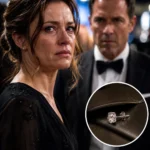
Sienna Hart smiled like she had never paid full price for anything in her life. She wore a white linen dress in February, gold sandals, and my mother’s emerald bracelet.
The bracelet was what almost broke me.
Not the affair. I had known about that for seven months.
Not the way Julian’s hand rested at Sienna’s waist, possessive and lazy, as if he were guiding her into a restaurant rather than into the legal dismantling of our marriage.
Not even the yacht.
It was the bracelet.
My mother had worn those emeralds the night before she died. Julian had told me they were locked in the vault at our Boston brownstone. But there they were, glittering against Sienna’s wrist while she leaned over the counter and whispered to the clerk, “Can we rename her today? I was thinking Sienna Blue.”
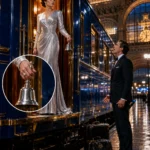
Behind the tinted glass wall, Newport Harbor flashed silver beneath a cold morning sun. Our yacht waited at the farthest slip, three decks of white steel and dark teak, the name Aurora Belle painted across the stern in navy script.
I had named her after my daughter.
Aurora was seven years old, missing her two front teeth, obsessed with sea turtles, and convinced every boat had a soul.
Julian cleared his throat.
“Evelyn,” he said, in the voice he used when photographers were near, “don’t make this difficult.”
There were six people in the registry office: the clerk, two junior associates from Julian’s firm, a registry director, Sienna, Julian, and me.
That was the audience he had chosen for my humiliation.
Small. Private. Rich.
The kind of room where cruelty could happen quietly and still echo for the rest of your life.
He slid a folder toward me. “Your signature is only a formality.”
Sienna’s smile grew.
I looked down at the paperwork. Vessel transfer acknowledgment. Spousal consent. Change of beneficial use. Temporary authorization for title modification.
They had printed little yellow arrows beside the signature lines, as if I were a child.
May you like
“Only a formality?” I asked.
Julian’s jaw tightened. He was beautiful when he was angry. That had fooled me for years. He had the kind of face magazines called patrician: sharp cheekbones, gray eyes, silver at the temples before forty-five. A face made for boardrooms, opera boxes, and apologies that cost nothing.
“Yes,” he said. “The boat is a marital asset.”
Sienna laughed softly, as if the word marital amused her.
I touched the edge of the folder but did not pick up the pen.
The clerk typed something into her terminal. The director stood a little straighter. One of the associates shifted his weight.
Julian noticed none of it. Men like him rarely notice the floor moving until the chandelier falls.
He leaned closer. His cologne was the same one he had worn on our wedding day in Charleston: cedar, bergamot, arrogance.
“Sign, Evie,” he murmured. “Do not embarrass yourself.”
That was when I smiled.
Not because I was calm.
Because my rage had gone cold enough to shine.
“Let’s wait,” I said.
“For what?” Sienna asked.
“For the registry,” I said.
The clerk’s printer woke with a low mechanical hum. The director took the page, read it, and his face changed.
Julian finally turned.
On the glass display mounted behind the front desk, the registry file appeared in clean black letters.
VESSEL: AURORA BELLE
OFFICIAL NUMBER: 1198-74-NP
LEGAL OWNER: THE AURORA WHITMORE IRREVOCABLE TRUST
TRUSTEE OF RECORD: EVELYN ROSE WHITMORE
BENEFICIARY: AURORA JUNE WHITMORE
TRANSFER STATUS: RESTRICTED
SPOUSAL CLAIM: NONE
Sienna stopped smiling.
Julian blinked once.
I looked at him, then at the emerald bracelet on her wrist.
“My signature,” I said, “was never a formality.”
Chapter 1: The Registry Where He Tried to Crown Her
The first lesson my father taught me about wealth was that the loudest money is usually borrowed.
He taught me this on a rainy Sunday in Maine when I was eleven, sitting barefoot in the galley of his old fishing boat while he repaired a brass compass with hands that smelled like salt and engine oil.
“Remember this, Evie,” he said. “Real ownership doesn’t need to shout. It sits quietly in a drawer, notarized.”
At the time, I thought he was talking about boats.
Years later, standing in the Newport registry while my husband tried to hand my daughter’s yacht to his mistress, I understood he had been talking about survival.
Julian Whitmore came from the kind of Boston family that pronounced “summer” as a verb and treated old houses like bloodlines. His grandfather had sat on bank boards. His mother chaired museum committees. His father had lost most of the family money with the quiet dignity of men who never go to prison for mistakes that ruin other people.
When I met Julian, he wore a tuxedo like a second skin and carried debt like a fragrance nobody else could smell.
I was twenty-six, newly in charge of Calder Marine after my father’s sudden heart attack, and too young to understand the difference between being desired and being targeted.
Julian understood that difference perfectly.
He courted me in expensive rooms with soft lighting. He sent handwritten notes. He remembered my coffee order. He held my hand at my father’s memorial and did not flinch when I cried into his shirt.
For two years, he was flawless.
Then we married, and he became inevitable.
The first betrayal was not Sienna Hart.
It was a sentence.
“You’re emotional, Evie. Let me handle the complicated things.”
He said it after Aurora was born, when I was exhausted and stitched and half-mad with love for the six-pound girl sleeping against my chest. He said it again when I wanted to review investment accounts. Again when I questioned a bridge loan. Again when I saw Calder Marine money moving through a consulting company I did not recognize.
By our tenth anniversary, Julian had turned my caution into a personality flaw and his control into protection.
He did not shout. That would have been vulgar.
He corrected.
He sighed.
He touched the small of my back in public and pinched the soft skin above my hip in private when I spoke out of turn.
He bought apologies in diamonds.
He taught me to smile while bleeding.
Sienna Hart entered our life as a lifestyle consultant for the redesign of our Palm Beach house. She was twenty-nine, ambitious, and bright in the way polished knives are bright. She had grown up in Scottsdale, reinvented herself in Los Angeles, and arrived on the East Coast with a portfolio of cream interiors, celebrity clients, and a laugh that made men believe they were young again.
I disliked her immediately, which made Julian call me insecure.
“She’s talented,” he said.
“She called our daughter ‘the kid,’” I said.
“She was joking.”
“She asked whether the yacht has a master suite or an owner’s suite because ‘master is problematic now.’”
“You’re being unkind.”
Three weeks later, he bought her a Cartier watch.
Four months later, she began wearing my perfume.
Seven months later, I found her earring under the passenger seat of Julian’s Aston Martin.
By then, I had already stopped asking questions out loud.
That was my second lesson in wealth: when a man builds a cage out of concern, do not rattle the bars. Study the lock.
I hired a forensic accountant named Margaret Cho, a woman with blunt silver hair, quiet shoes, and the terrifying patience of a surgeon. I told Julian she was helping with charitable tax compliance for the Whitmore Ocean Foundation.
Margaret found three shell companies in Delaware, two in Nevada, and one charming little fraud wrapped in a Wyoming LLC called Hartline Creative Holdings.
Hartline.
Sienna Hart.
Julian had paid her $1.8 million in “design consulting” from accounts tied to Calder Marine procurement. He had moved another $4.6 million through equipment leases that did not exist. He had pledged part of his expected divorce settlement as collateral for a loan from a private lender in Palm Beach.
Expected.
That word sat in my chest like a bullet.
Julian was not simply having an affair. He was planning an exit.
A glamorous one.
The Aurora Belle was supposed to be the centerpiece.
He wanted the yacht because it looked like victory. Because rich men measure freedom in engines, hull length, and women young enough to believe cruelty is confidence. Because Sienna had posted a photo from the aft deck at sunset with the caption, “Some women inherit the sea. Others are born to take it.”
I did not comment.
I sent the screenshot to Margaret.
Then I called Sebastian Cross.
Sebastian had been my father’s maritime attorney for twenty years. He was six-foot-three, disciplined, and elegant in a way that did not ask to be admired. Former Navy. Harvard Law. A widower. The kind of man who could silence a room without raising his voice.
He had known me when I wore braces and stole peppermints from the reception bowl outside his office.
When I arrived at his brownstone on Beacon Hill with a folder full of lies, he opened the door himself and said, “How long has he been stealing from you?”
Not “Is he?”
Not “Are you sure?”
How long.
That was the first time I cried.
Not because I was weak.
Because somebody had finally believed me without making me perform my pain.
Sebastian did not touch me. He did not rush me. He put a glass of water on the table and waited until I could breathe.
Then he read every page.
At midnight, he removed his glasses and said, “Julian thinks the yacht belongs to the marriage.”
“It doesn’t?”
“No.” His mouth tightened. “Your father placed Aurora Belle into an irrevocable trust eighteen months before your wedding.”
I stared at him.
“I knew there was a trust,” I said. “For Aurora. For education, medical needs, future protection. But the yacht?”
“Your father amended the trust after your engagement.” Sebastian slid a document across the table. “He named you trustee. Your daughter became beneficiary at birth.”
“My daughter wasn’t born yet.”
“The trust anticipated future issue.” He tapped the page. “Your father was very careful.”
The room blurred.
My father had disliked Julian.
Not openly. My father was too polite for that. But whenever Julian spoke about legacy, my father’s eyes went flat. The week before my wedding, he had taken my hand and said, “Love him if you must, Evie. But do not ever confuse a husband with a harbor.”
I thought he meant marriage was not an anchor.
Now I understood.
A harbor is where you go to survive storms.
Julian was the storm.
For the next eight weeks, I became the kind of wife men underestimate into immortality.