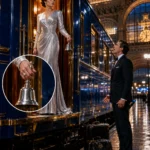
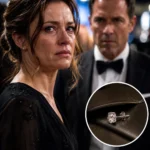
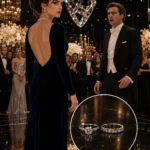
My husband gave my chair at the organ-transplant gala to his mistress and called her the woman who had saved his life.
Sloane Archer sat beneath the crystal chandeliers in the place marked MRS. VIVIAN VALE, wearing a silver gown that looked poured over her body. One manicured hand rested over Preston’s chest, directly above the scar left by the surgeons who had given him a second heart.
Around them, two hundred doctors, donors, politicians, and Manhattan socialites applauded his miraculous recovery.
Preston smiled at her as though she were the miracle.
Then he looked toward the back of the ballroom, where his staff had quietly moved me beside the service doors.
“My illness showed me who truly loved me,” he told the room. “When I was at my weakest, Sloane was there. Vivian disappeared when I needed love most.”
A murmur moved through the ballroom.
Some people stared at me with pity.
Others looked away, embarrassed on my behalf.
Sloane lowered her lashes with practiced humility. The diamond bracelet on her wrist caught the light.
It had been purchased through one of my husband’s shell companies.
The shell company had been funded with money stolen from a corporation I quietly controlled.
I knew because the forensic report was already sitting inside my attorney’s briefcase.
Preston believed my silence meant I had nothing to say.
He had always confused silence with weakness.
Men like Preston often did.
I did not stand.
I did not cry.
I did not correct him.
I simply lifted my champagne glass and waited.
At precisely nine seventeen, Dr. Lenora Bell, president of St. Aurelia Medical Center, stepped onto the stage carrying a sealed ivory envelope.
She thanked the surgical team. She thanked the donor families. She thanked the nurses who had slept in waiting rooms and the coordinators who had transported organs through snowstorms and midnight traffic.
Then the enormous screens behind her changed.
A gold aster appeared against a black background.
Preston stopped smiling.
Sloane’s fingers tightened over his heart.
Dr. Bell opened the envelope.
“Tonight,” she said, “we are proud to reveal the anonymous benefactor who founded the Aster House Transplant Assistance Program.”
The room fell still.
“This program has covered transportation, housing, medication, rehabilitation, and insurance gaps for more than eight hundred transplant patients. It also funded the advanced ventricular support treatment that kept Mr. Preston Vale alive while he waited for a donor heart.”
Preston turned slowly toward me.
The color had drained from his face.
Dr. Bell continued.
“The benefactor requested anonymity for six years. But after tonight’s remarks, she has given us permission to correct the public record.”
My husband’s mistress removed her hand from his chest.
Dr. Bell looked directly at me.
“Please join me in thanking Mrs. Vivian Marlowe Vale.”
For one suspended second, no one moved.
Then the entire ballroom turned.
Every camera.
Every surgeon.
Every donor.
Every person who had watched my husband erase me.
I rose from the chair beside the service doors.
Preston stared at me as if the dead had spoken.
I adjusted the cuff of my black silk gown and walked toward the stage.
I had not come to defend myself.
I had come to end him.
Chapter 1: The Woman Seated by the Door
The applause did not begin all at once.
It started with the transplant nurses.
They stood near the center tables, some of them already crying. Then the surgeons rose. Then the board members. Within seconds, the ballroom filled with a sound so overwhelming that the chandeliers seemed to tremble above us.
I walked past Preston without looking at him.
That was the first cruelty.
Not anger.
Not accusation.
Irrelevance.
Dr. Bell embraced me at the edge of the stage.
She had known me for seven years, though almost everyone in the room believed we were meeting for the first time. Together, we had built Aster House from a three-room apartment near the hospital into a national assistance network for transplant families.
I had attended board meetings through private entrances.
I had signed grants under my maiden name.
I had insisted that no building bear my name and no press release include my photograph.
The program was never supposed to be about me.
It was born from the last promise I made to my mother.
When I was twenty-four, Caroline Marlowe spent eleven months waiting for a heart that never came. My father could buy villas, companies, and senators’ attention, but he could not buy time.
On my mother’s final night, she held my hand and whispered, “Money is only beautiful when it becomes mercy.”
She died at sunrise.
Aster House began three years later.
I named it after the purple flowers she grew at our home in Newport. Flowers that bloomed late in the season, when everything else had begun to fade.
Preston knew my mother’s story.
He simply never bothered to ask what I had done with it.
Onstage, Dr. Bell gave me the microphone.
Across the ballroom, Sloane sat perfectly still. Her beauty had sharpened into something brittle. Preston remained beside her, one hand gripping the edge of the table.
His scar was hidden beneath a bespoke tuxedo I had ordered during his recovery.
His medication had been paid for through a private trust I had established.
The rehabilitation team he publicly credited to Sloane had submitted their invoices to my family office.
The apartment where he recovered overlooked Central Park and belonged to one of my holding companies.
Even the car that had brought him to the gala was leased through an entity whose controlling member was me.
He had mistaken access for ownership.
That was going to be an expensive mistake.
I looked out at the crowd.
“I did not fund Aster House to receive applause,” I said. “I funded it because no family should have to choose between keeping a loved one alive and keeping a roof over their heads.”
The room quieted.
“The generosity that matters most in transplantation belongs to donor families. They say yes during the worst moments of their lives so that strangers may have another morning.”
Several people lowered their heads.
I allowed my gaze to move toward Preston.
He looked terrified now.
Good.
“I also believe,” I continued, “that a second chance is not a reward. It is a responsibility.”
Sloane’s lips parted.
Preston looked as though I had struck him.
“I did not help my husband because I wanted him to owe me. I helped him because I loved him. What he chose to do with that life belongs to him.”
No shouting.
No tears.
No mention of adultery.
Only truth.
Truth, delivered calmly, is far more humiliating than rage.
The applause began again.
This time, it did not include Preston.
When I stepped down from the stage, he caught my wrist.
“Vivian.”
His voice was low enough that only Sloane and I could hear.
I looked at his hand until he released me.
“What did you do?” he whispered.
I almost smiled.
The question told me everything.
Not How could I hurt you?
Not Why didn’t you tell me?
Not even Is this true?
What did you do?
As though my refusal to remain invisible were the crime.
“I stood up,” I said.
Sloane recovered first.
She rose from my chair and arranged her expression into wounded dignity.
“Vivian, this isn’t the place.”
I turned toward her.
Up close, I could see that her silver gown had been altered by Maison Laurent, the same Madison Avenue atelier that had made my wedding dress.
The payment had been routed through Silver Laurel Media, her consulting company.
Silver Laurel had billed Vale Meridian Group four hundred and eighty thousand dollars for “reputation stabilization services.”
Most of those services involved jewelry, private travel, and furnishing the Santa Monica house Preston had promised her.
“I agree,” I said. “You should leave.”
Her face hardened.
Preston stepped between us.
“She is my guest.”
“No,” I said. “She is your evidence.”
He went still.
Before he could answer, Naomi Price appeared beside me.
Naomi was forty-six, five feet ten in heels, and possessed the composed expression of a woman who had ended billion-dollar disputes before breakfast.
She wore a white dinner jacket and carried a slim black folder.
Preston knew her by reputation.
Everyone in Manhattan finance did.
“Mr. Vale,” Naomi said, “you have been served.”
She held out the folder.
He stared at it.
Sloane’s eyes moved rapidly between us.
Naomi continued in the same courteous tone.
“The documents include a petition for divorce, a notice of preservation regarding corporate and personal records, and a temporary restraining order prohibiting the transfer, concealment, sale, or destruction of marital and business assets.”
People at the nearest tables had begun pretending not to listen.
They were failing.
Preston did not take the folder.
Naomi placed it on the table beside his untouched champagne.
The gold lettering on the cover read:
VALE v. VALE
Sloane’s face lost what remained of its color.
Preston looked at me with the stunned fury of a king discovering that the palace had been rented.
“You planned this.”
“Yes.”
“For how long?”
“Long enough.”
“Vivian, let’s go home.”
The words were almost convincing.
There had been a time when that voice could make me abandon a room, a schedule, a principle.
A time when I believed his urgency was passion.
Now I recognized it as control.
“We do not have a home,” I said.
His expression changed.
“The townhouse—”
“Belongs to Marlowe Residential Trust.”
“The Hamptons house?”
“Same trust.”
“The apartment in Paris?”
“My mother purchased it in 2009.”
His eyes flickered.
Sloane looked at him sharply.
He had clearly told her a different version of our wealth.
Preston lowered his voice.
“You cannot lock me out of my own life.”
“I did not lock you out. I stopped paying for it.”
The string quartet had gone silent.
So had half the ballroom.
He leaned closer.
“You think humiliating me makes you powerful?”
“No,” I said. “The documents make me powerful. This is simply the part people will remember.”
I turned away.
Sloane called after me.
“He nearly died while you were gone.”
I stopped.
That accusation still had the ability to find the old wound.
The ICU hallway.
The smell of antiseptic and burned coffee.
The phone calls to specialists in Boston, Cleveland, and Los Angeles.
The nights I slept in a chair outside his room because he became agitated when he saw me cry.
The morning he asked me to leave because Sloane “understood the business pressure better.”
The weeks I spent securing the treatment his insurance committee had denied.
Gone.
That was what he had named my labor.
I faced her.
“During the thirty-eight days you visited him,” I said, “I paid for the other two hundred and eleven.”
She blinked.
“I attended every medical conference. I negotiated the bridge-treatment funding. I arranged his rehabilitation. I hired the night nurses. I answered every call from the transplant team.”
Preston stared at the floor.
“You,” I told Sloane, “posted photographs from the private recovery suite after I asked the hospital to keep his condition confidential.”
“I was supporting him.”
“You were branding yourself.”
Her mouth tightened.
I stepped closer, not enough to threaten her, only enough to make retreat obvious.
“Do not confuse proximity with sacrifice. You held his hand for photographs. I held his life together when no one was watching.”
I left them beneath the chandeliers.
Outside, winter rain darkened Fifth Avenue. Black cars lined the curb, their roofs gleaming beneath the hotel lights.
Alexander Hale stood beneath the awning.
He wore a midnight-blue tuxedo with no tie, his dark hair touched with silver at the temples. At forty, he had the restrained beauty of something expensive that had no need to advertise itself.
He had served on the St. Aurelia foundation board for nearly a decade.
He was also the only man in the ballroom who had known about Aster House before tonight.
“You were magnificent,” he said.
“I was factual.”
“Much more dangerous.”
A porter opened the door of my car.
I looked back through the glass entrance.
Preston remained beside the table, surrounded by people who no longer knew how to speak to him.
Sloane was already checking her phone.
The first clips were appearing online.
By morning, the world would know that Preston Vale had thanked his mistress for a life his wife had financed.
But public humiliation was not my revenge.
Public humiliation was the invitation.
The real event would take place at nine o’clock the next morning, inside a boardroom forty floors above Park Avenue.
Alexander watched me with quiet concern.
“Are you ready for tomorrow?”
I thought of the documents Naomi had collected.
The invoices.
The recordings.
The voting agreements.
The hidden accounts.
The email in which Preston had described me as “an obstacle that could be managed after the gala.”
“Yes,” I said.
He offered me his hand as I entered the car.
His fingers were warm.
For one reckless second, I remembered Newport fifteen years earlier, when Alexander and I had nearly kissed on my father’s sailboat before Preston arrived in my life like a storm wearing cuff links.
Then the moment passed.
I released his hand.
Behind us, camera flashes exploded through the hotel windows.
Preston had wanted the world to witness his rebirth.
Instead, it had witnessed the first minutes of his destruction.
Chapter 2: The Year I Learned to Become Invisible
Preston had not always been cruel.
That would have made leaving easier.
When I met him, he was thirty-one and brilliant, the son of a bankrupt hotel developer from Connecticut who had learned to turn shame into ambition.
He wore suits he could not afford and spoke about the future as though he had already purchased it.
At a charity auction in Newport, he bid fifty thousand dollars on a weekend in Provence.
He had less than twelve thousand dollars in his account.
When I asked how he intended to pay, he smiled.
“I knew you wouldn’t let me embarrass myself.”
I should have heard the warning.
Instead, I laughed.
I was twenty-eight, lonely after my mother’s death, and exhausted by men who cared more about my surname than my mind. Preston seemed different because he did not flatter my wealth.
He challenged it.
He told me inherited money had made me cautious. He said I lived behind glass. He said I needed someone willing to break it.
For a while, I mistook destruction for freedom.
We married eleven months later at my family’s estate in Newport.
My father distrusted him.
Alexander disliked him.
I defended him against both.
Preston took my faith and built an empire upon it.
Vale Meridian began with three distressed hotels acquired through financing arranged by Marlowe Capital. Preston renovated them into dark, theatrical properties filled with marble bars, rooftop pools, and restaurants where reservations were treated like currency.
Magazines called him a visionary.
Investors called him fearless.
He was neither.
He was talented, yes.
He also had my family’s balance sheet beneath him every time he leaped.
Within eight years, Vale Meridian owned luxury hotels, private clubs, residential towers, and a health-retreat brand marketed to people who believed wellness should involve Italian linens.
I remained in the background.
That was our arrangement.
He became the story.
I became the structure.
Then, three weeks after our tenth anniversary, Preston collapsed during a presentation in Chicago.
He had been walking across a stage when his knees buckled. The video showed his hand rising toward his chest before he disappeared behind the podium.
By the time I reached Northwestern Memorial, he was unconscious.
The diagnosis was aggressive cardiomyopathy complicated by a rhythm disorder. His heart was failing faster than medication could support it.
He needed a transplant.
He might not survive long enough to receive one.
For fourteen months, illness consumed our lives.
At first, Preston needed me.
He woke from procedures reaching for my hand.
He cried once, late at night, after a physician explained the mortality statistics.
“I’m not ready to disappear,” he said.
“You won’t.”
“You cannot promise that.”
“No,” I said. “But I can promise you won’t face it alone.”
I meant it.
I suspended three foundation projects and moved into a private apartment near St. Aurelia. I built color-coded medication charts. I learned the sound of each monitor. I knew which nurse brought extra blankets and which resident needed to be reminded that Preston reacted badly to certain sedatives.
When the insurance review board refused to cover an advanced ventricular support procedure, I flew to Boston and met with the device manufacturer.
When the hospital needed a guarantee, Aster House provided it.
When Vale Meridian’s creditors threatened to accelerate its debt because Preston was incapacitated, Marlowe Capital created an emergency investment vehicle.
Aster Bridge Holdings injected forty-eight million dollars into the company.
The agreement gave Aster Bridge warrants and temporary voting authority if Vale Meridian violated specified financial covenants.
Preston signed from his hospital bed.
His personal attorney reviewed every page.
I sat beside him when he did it.
He did not ask who ultimately owned Aster Bridge.
He assumed it belonged to my father.
Preston had always imagined money as masculine when it was powerful and feminine when it was spent.
The funds were mine.
My father had died two years earlier, leaving me controlling interest in Marlowe Capital. I kept Alexander as chief investment officer because he understood two things Preston never had.
Numbers.
And restraint.
For the first six months, Sloane Archer was simply Vale Meridian’s head of communications.
She was thirty-two, elegant, socially agile, and very good at persuading journalists that ordinary corporate decisions were historic achievements.
She arrived at the hospital carrying fresh shirts, investor reports, and carefully selected photographs from Preston’s properties.
I was grateful to her.
That is one of the humiliations no one discusses.
Sometimes the other woman enters your marriage through a door you hold open.
Sloane began staying later.
She learned which nurses would allow her beyond visiting hours.
She brought Preston food from restaurants he missed. She filled his room with laughter when I was in meetings with physicians.
He started asking me to handle “the difficult things” outside.
Sloane handled the moments visible enough to become memories.
I did not understand the affair immediately.
I understood it in fragments.
A hotel charge in Washington during a week Preston claimed Sloane was in Miami.
A photograph on her private social account showing a man’s hand on a dinner table. The wedding ring had been removed, but the watch was one I had given him.
A message that appeared on his tablet while he slept.
I hate watching her act like your wife when I’m the one making you feel alive.
I read it twice.
Then I placed the tablet back on the tray.
The woman I had been before his illness would have confronted him.
She would have demanded truth, thrown a glass, called an attorney before dawn.
But illness changes the geometry of anger.
Preston was waiting for a heart.
His skin had turned gray.
Some mornings, he could not cross the room without help.
I was terrified that an argument might increase his blood pressure, trigger an arrhythmia, or become the final stress his body could not endure.
So I waited.
I told myself I would address it after the transplant.
Then I found the first invoice from Silver Laurel Media.
The company had billed Vale Meridian for a strategic campaign that did not exist. The address belonged to a mailbox service in Delaware. The beneficiary was Sloane.
I sent it to Alexander.
Within forty-eight hours, he found six more.
“Vivian,” he said during a secure call, “this is not just an affair.”
I sat alone in a consultation room at St. Aurelia, staring at a painting of boats on blue water.
“How much?”
“Just over two million so far.”
My voice remained steady.
“From which accounts?”
“Vale Meridian operating funds. Some invoices were approved through Preston’s executive credentials.”
“He was sedated during two of those approval dates.”
“I know.”
The words landed quietly.
Sloane had used his access.
Or Preston had authorized it in advance.
Neither possibility was kind.
“What else?”
Alexander hesitated.
That frightened me more than the number.
“We found a draft communication strategy. The file was saved to a corporate server. Your name appears throughout.”
He sent it.
The title was:
POST-RECOVERY NARRATIVE AND LEADERSHIP RESTORATION PLAN
The document described how Preston would return to public life after his transplant.
Sloane would be positioned as the loyal executive who protected him during the crisis.
I would be described as a private spouse who had withdrawn from the marriage under emotional pressure.
The language had been tested.
Cold.
Clinical.
Designed for journalists.
One paragraph proposed that my “prolonged absences” could support a future claim that I lacked the temperament necessary for involvement in Vale Meridian.
Another recommended the gala as the ideal place to “soft-launch the new personal narrative.”
I read the final line three times.