PART 1
He gave my front-row seat to his mistress, and the room went so quiet I heard the crystal in my bracelet click against my wrist.
She sat there with my novel pressed to her silk lap like a trophy, smiling under the ballroom lights while my husband kept one hand on the back of her chair.
I smiled back because my attorneys already had the signatures.
My name was on that seat in black letters.
Evelyn Pierce.
Front row.
Center aisle.
Close enough to see the water rings beneath the crystal glasses onstage.
Close enough for the cameras to catch my face when the moderator introduced the most mysterious author in America.
Close enough for Graham to believe he had chosen the perfect place to break me.
The Rutherford Hotel ballroom smelled of roses, candle wax, and money.
Gold sconces warmed the paneled walls.
A harpist in the corner plucked something delicate and expensive while guests leaned close over champagne flutes.
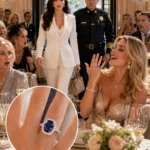
Editors, donors, critics, publicists, and women in diamonds pretended not to watch me stop in the aisle.
But their eyes moved.
Oh, they moved.
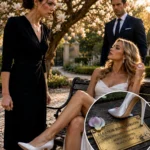
They slid from my black dress to Celeste Vale’s champagne satin gown.
They lingered on Graham’s hand on her chair.
They dropped to the hardcover book in Celeste’s lap.
The Glass Orchard.
My book.
My secret.
My blood in black ink and silver foil.
Celeste crossed her legs slowly, as if the movement had been rehearsed in a mirror.
The slit of her dress opened just enough to flash a long, polished knee.
Then she lifted her chin and smiled at me with the soft cruelty of a woman who knew she had permission.
Graham saw me.
He did not move his hand.
He did not look startled.
He only leaned toward me, his voice low and neat.
“Evelyn, don’t make a scene.”
The words landed with the dull weight of a familiar hand.
For twenty-nine years, Graham had been teaching me that dignity meant swallowing whatever he served.
At dinner parties, he corrected my stories.
At charity luncheons, he finished my sentences.
When I forgot a donor’s wife’s name, he laughed and told the table I had always been “dreamy.”
When I bought notebooks, he called them “little diaries.”
When I stayed up late, he said women my age needed sleep more than fantasies.
May you like
He never shouted in public.
That was part of his talent.
Graham Alder knew how to make cruelty sound like concern.
“That’s my seat,” I said.
My voice was calm enough that a woman behind me lowered her phone.
Celeste glanced down at the card as if she had only just noticed it.
“Oh,” she said.
Her fingers brushed the black letters of my name.
“Is it?”
Then she looked back at Graham with a little laugh.
“Graham said you wouldn’t mind.”
Graham’s jaw tightened.
He wore the tuxedo I had helped choose at Bergdorf’s, midnight wool with satin lapels.
On his wrist gleamed the watch I had bought him for our anniversary, the one engraved with Always.
He looked handsome.
He looked reasonable.
He looked like a man who had already decided how the room would remember this.
“Evie,” he said.
There it was.
Evie.
The small name.
The private leash.
“You don’t even read these books.”
A few heads turned harder.
A man in a velvet jacket paused with a canapé halfway to his mouth.
Celeste’s smile widened.
The cover of The Glass Orchard gleamed against her lap.
Its design showed a pale orchard beneath a glass dome, branches heavy with fruit that looked beautiful until you noticed the thorns.
She ran one red fingernail over the title.
A tiny scraping sound reached me through the music.
Graham sighed in that patient way he used with waiters and wives.
“This is a serious literary event,” he said.
“Real artists are here tonight, and I need you not to embarrass yourself because you feel excluded from something you never cared about until this moment.”
It sounded almost sensible.
That was why people believed him.
He could wrap a knife in velvet and call it a napkin.
Celeste lifted the book slightly.
“I’m sure we can find another place for you,” she said.
There was sweetness in her tone.
There was poison beneath it.
The photographer near the side aisle raised his camera.
I felt the lens like cold breath against my cheek.
My left hand trembled once.
Only once.
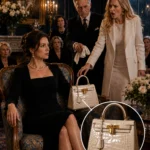
I closed it around my evening bag until the clasp bit into my palm.
Inside that bag was not lipstick.
Not tissues.
Not a compact mirror to fix the face my husband wanted ruined.
Inside was a folded copy of the emergency injunction my attorney Mara Whitcomb had filed that morning.
Inside was the first page of a forensic report showing Graham had pledged my family trust as collateral without authority.
Inside was a photograph of my signature, except the E looped wrong.
The woman who had written books in secret for nine years noticed loops.
The woman who had signed trust documents since she was twenty-two noticed pressure marks.
The wife Graham thought did not understand money had learned to read betrayal in ink.
My family trust was not only money.
It was Orchard House, where my mother had planted pear trees after my father left.
It was the small press my grandmother built when no bank would lend to women.
It was scholarships for widows returning to college.
It was the Rutherford Literary Society’s winter salon, which Graham had bragged about co-chairing as if his name had purchased its history.
It was the quiet spine of the Pierce women.
And Graham had tried to mortgage it.
He had used it to secure loans for hotel renovations, art purchases, and a cultural venture whose paperwork my attorney had traced to a company with Celeste Vale’s initials.
C.V. Cultural Holdings.
At first, I thought the statement in my inbox had been a bank error.
Then Mara found more documents.
A line of credit.
A forged authorization.
A pledge agreement.
A power of attorney I had never signed.
A physician’s letter describing me as “increasingly forgetful, socially withdrawn, and vulnerable to emotional disturbance.”
That physician had never examined me.
Graham had been preparing to make me look unstable.
Tonight was not only humiliation.
Tonight was evidence.
If I cried, he would say fragile.
If I shouted, he would say unstable.
If I grabbed my book from Celeste’s hands, he would say violent.
If I walked away, he would say I had abandoned my seat voluntarily.
So I stood still.
I breathed through the burn in my throat.
I let the ballroom watch.
Then I gave Celeste a smile so soft it made her blink.
“Keep it warm,” I said.
Graham’s expression flickered.
Just a flicker.
That was the first crack.
He expected pleading.
He expected anger.
He expected the old Evelyn, the one who apologized when other people bled on her carpet.
He did not know that the old Evelyn had died six months earlier at her desk, staring at a wire transfer she had not authorized.
He did not know I had called Mara before I called him.
He did not know I had met a forensic accountant in a coffee shop two towns away, my hands wrapped around a paper cup while she explained how thieves hide behind spouses.
He did not know my agent, Margot Voss, had booked a suite upstairs under a false name.
He did not know the anonymous author Aurelia Wren had agreed to appear tonight for the first time because I had chosen this room, this audience, and this stage.
Aurelia Wren.
The name had begun as a shield.
Aurelia, for the gold leaf my mother pressed into old book covers.
Wren, for the tiny bird that built nests inside impossible places.
I had written after midnight while Graham slept.
I had written in guest rooms, locked bathrooms, airport lounges, and the back seat of cars while he took calls.
I had written through hot flashes, grief, loneliness, and the slow suffocation of being treated like furniture in my own life.
The Glass Orchard became a bestseller with no author photograph.
No interviews.
No lunches.
No soft-focus profile about my marriage.
Critics called Aurelia Wren ruthless.
They called her elegant.
They called her a woman who understood the violence of quiet rooms.
Celeste had posted a photograph holding my book two weeks earlier.
Her caption read, A merciless little masterpiece.
Graham had liked the post.
Of course he had.
He was always generous with admiration when it did not belong to his wife.
The moderator walked onto the stage.
Her silver hair shone under the lights.
Her cards trembled faintly in one hand, not with nerves but anticipation.
She knew.
Only four people in that ballroom knew.
I was one of them.
Graham was not.
Celeste lifted the book higher as the photographers shifted toward the stage.
She angled the cover outward.
She wanted to be seen holding taste.
She wanted to look close to genius.
Graham bent toward her and murmured something.
Celeste laughed, a low bright sound.
Then the moderator tapped the microphone.
The ballroom stilled.
“Good evening,” she said.
“On behalf of the Rutherford Literary Society, thank you for joining us for our winter salon.”
Applause moved through the room like silk being shaken open.
I remained in the aisle.
No one asked me to move.
Somewhere near the back, a waiter froze with a tray of champagne.
The moderator continued.
“Tonight is unusual for us, and for the literary world.”
Graham straightened.
His hand remained on Celeste’s chair.
Celeste’s eyes glittered.
The moderator smiled.
“For nearly a year, readers have wondered about the identity of the author behind The Glass Orchard.”
A camera light blinked red.
My pulse beat once in my ear.
“Tonight,” the moderator said, “for the first time anywhere, we are honored to welcome that author to the stage.”
Graham did not look at me.
He was too busy watching the curtain.
Celeste sat taller.
She hugged my novel against her stomach as if proximity could become ownership.
The moderator turned toward the wings.
“Please welcome the author of The Glass Orchard…”
A silence opened.
The whole room leaned into it.
I stepped forward.
Celeste’s smile died so suddenly it looked cut from her face.
Graham’s hand slipped from her chair.
My heel touched the first step to the stage.
And behind me, Celeste’s champagne glass shattered beneath my stolen seat.
PART 2
The sound of breaking glass followed me up the stage steps.
It was sharp, bright, and almost musical.
A hundred faces turned from Celeste to me, then back again, trying to understand why the quiet wife from the aisle was walking into the white circle of light.
My knees felt hollow.
My mouth tasted of copper.
But I kept moving.
The moderator reached for my hand and squeezed it once.
Her palm was warm.
“Ladies and gentlemen,” she said, her voice ringing clear, “Aurelia Wren is Evelyn Pierce.”
The room did not gasp all at once.
It rippled.
First the front row.
Then the donors.
Then the editors with their open mouths.
Then the back of the ballroom, where phones lifted like silver birds.
I saw Graham’s face lose color.
Not dramatically.
Not enough for anyone else to call it collapse.
Just enough that the man beside him leaned over and asked if he was all right.